Let me tell you about the year I almost ruined Thanksgiving dinner. Or rather, the year I almost ruined it by being too conservative. It was five years ago, and I was responsible for the vegetable tray. I played it safe. I did the standard green bean casserole—cream of mushroom soup, fried onions, the works. It was fine. It was edible. It was completely forgettable.
My husband, bless his heart, ate two bites and politely changed the subject. Meanwhile, my sister-in-law’s harvest roasted chicken was getting raved about. Everyone was fighting over her gravy. I felt like a background character in my own holiday.
That was the moment I decided I was done playing it safe. I wanted a side dish that didn’t just sit there looking pretty. I wanted something that smelled like autumn, tasted like comfort, and actually made people stop chewing long enough to ask, “What is that?”
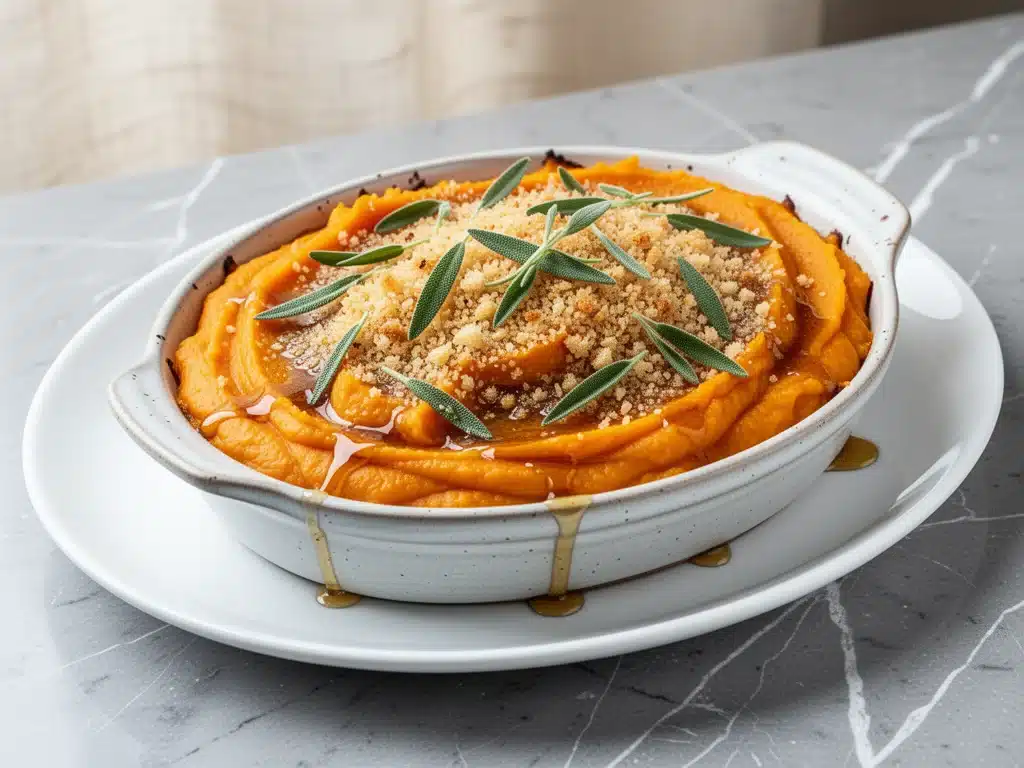
Enter the Butternut Squash Sage Brown Butter Casserole. I stumbled onto this recipe by accident. I was trying to make butternut squash soup for a Tuesday night meal, but I overdid the sage and the butter. Instead of soup, I got a rich, nutty, creamy mash that I piled into a baking dish and broiled until the top was golden and crisp. My kids, who usually pick at anything orange, cleared their plates. And they asked for seconds.
Since then, this Butternut Squash Sage Brown Butter Casserole has become the star of our Thanksgiving table. It’s creamy, it’s savory, it’s got that deep, toasted flavor from brown butter that feels fancy but is actually super simple. If you’re looking for a side dish that will finally make you the hero of the holiday, this is it. Trust me. You’ll never go back to plain mashed potatoes again.
Why You’ll Love This Butternut Squash Sage Brown Butter Casserole
There are about a dozen reasons I keep coming back to this recipe, but if I had to narrow it down, here’s why it’s my new Thanksgiving obsession:
It’s Actually Savory — Most squash dishes lean too sweet. This one strikes the perfect balance. The brown butter adds a nutty, almost toffee-like depth, while the fresh sage brings that classic herbal punch. It tastes like a high-end restaurant side, not a school cafeteria.
Leftovers Are Better Than Dinner — I’m not kidding. The flavors meld together overnight. By Thanksgiving morning, when I’m reheating it, the aroma fills the entire house. It tastes richer and more complex than it did the night before. I deliberately make extra for lunch on Black Friday.
It’s Make-Ahead Friendly — Thanksgiving stress is real. The best part of this casserole is that you can prep it the night before. Assemble it, cover it, and pop it in the fridge. When you’re ready to eat, you just pop it in the oven. No last-minute panic in the kitchen.
Everyone Loves It — Even the pickiest eaters. My vegetarian cousin loves it, my meat-loving uncle loves it, and even the kids who usually complain about “green stuff” or “orange mush” ask for more. It’s universally loved.
It Looks Stunning — That golden-brown, crispy top layer? It’s photogenic as hell. If you’re posting your Thanksgiving spread online, this is the dish that’s going to get all the likes. It looks fancy, but it’s just roasted squash and butter.
This casserole is my answer to “what’s for dinner” when I want something that feels special but doesn’t require a degree in culinary arts. It’s reliable, delicious, and guaranteed to make you look like a Thanksgiving wizard.
Ingredients You’ll Need
Here’s the thing about this recipe: it looks like a long list, but most of it is pantry basics or stuff you probably already have. I’m particular about a few things here, and I’ll tell you exactly why.
Butternut Squash (1 large, about 3-4 lbs / 1.5-2 kg) — This is the star. Buy a whole squash and peel it yourself. Pre-cut squash from the store is often dry or mushy. I prefer the long necks; they’re easier to peel. If you’re using a smaller squash, you might need two. Look for one that feels heavy for its size.
Unsalted Butter (½ cup / 115g) — You need a lot of butter here, and it needs to be high quality. This is where you brown it. I use Kerrygold or any European-style butter if I can find it. It has a higher fat content, which makes the brown butter taste richer. Don’t skimp on the butter.
Fresh Sage Leaves (1 cup, packed / about 30g) — Fresh is non-negotiable. Dried sage tastes like potpourri in this dish. You want that bright, piney, slightly peppery flavor. If you can’t find fresh sage, you can substitute dried, but use only 1 teaspoon and chop it fine. But please, try to find fresh.
Heavy Cream (½ cup / 120ml) — This adds the creaminess. You can use half-and-half if you want it lighter, but it won’t be as rich. I like the luxury of heavy cream in a holiday dish. It makes the texture silky smooth.
Garlic (3 cloves, minced / about 1 tablespoon) — Garlic adds that savory backbone. Fresh only. No jarred garlic. It tastes metallic in cream sauces. Just mince it finely so you don’t get giant chunks.
Nutmeg (¼ teaspoon, freshly grated) — Nutmeg is the secret weapon. It complements the squash perfectly. If you have a whole nutmeg, grate it yourself. Pre-ground nutmeg loses its flavor fast. A little goes a long way.
Salt and Black Pepper (to taste) — Kosher salt is best for cooking. I use about 1 teaspoon of kosher salt, but taste as you go. Black pepper should be freshly cracked.
Optional Topping: Panko Breadcrumbs (½ cup / 50g) — For that crispy top, I toss panko with a little melted butter. It adds crunch and texture. If you don’t have panko, regular breadcrumbs work too. Or skip it for a softer casserole.
Optional Topping: Pecans or Walnuts (¼ cup, chopped) — I love the crunch of toasted nuts. Pecans are more traditional for fall, but walnuts work great too. Chop them coarse so you get little bursts of flavor in every bite.
I always buy my squash from the farmer’s market if possible. They’re usually fresher and cheaper. And for the sage, I grow my own in a pot on the windowsill. It’s easy to keep alive and always handy when I need a garnish.
Equipment Needed
You don’t need fancy equipment for this. Here’s what I actually use:
Large Roasting Pan or Sheet Pan — I use a 9×13 inch baking dish for the casserole. But for roasting the squash, a large sheet pan is best. You want space between the pieces so they roast instead of steam.
Sharp Chef’s Knife — Cutting a whole butternut squash can be tricky. A sharp knife is essential. If your knife is dull, you’ll slip and hurt yourself. Learn to sharpen your knives. It’s a game-changer.
Vegetable Peeler — A Y-peeler works well for removing the tough skin. If the squash is very hard, you might need to roast it briefly first to soften the skin, but I usually just power through.
Food Processor or Blender — For a smooth puree, a food processor is easiest. I have a Cuisinart that handles it like a dream. You can use a hand blender or a fork, but it takes more effort. I prefer the food processor for consistency.
Small Saucepan — For browning the butter. A light-colored pan is helpful so you can see the color change. A stainless steel skillet works too.
Measuring Cups and Spoons — Standard stuff. I’m not super precise with the salt, but I measure the cream and butter.
Wooden Spoon — For stirring the butter and mixing the casserole. Silicone works too.
I’m obsessed with my crispy baked parmesan kale chips recipe because it uses similar equipment, so if you have the tools for that, you’re good to go here.
How to Make It: Step-by-Step

Alright, let’s make this! I’m walking you through exactly how I do it, including the little tricks I’ve picked up.
Step 1: Roast the Squash (45-60 minutes)
Preheat your oven to 400°F (200°C). Cut the butternut squash in half lengthwise. Scoop out the seeds and stringy bits with a spoon. Peel the skin off. The skin is tough and unpleasant to eat. Cut the flesh into 1-inch cubes. Toss them on a sheet pan with a little olive oil, salt, and pepper. Roast for 45-60 minutes until tender and caramelized at the edges. This step is crucial. Raw squash won’t taste as sweet. Roasting concentrates the flavor.
Step 2: Puree the Squash (5 minutes)
Let the squash cool slightly. Transfer it to a food processor. Pulse until smooth. If you want it extra smooth, you can push it through a mesh sieve, but I skip that step for a homey texture. Taste it. Add a pinch of salt if needed. Set aside.
Step 3: Brown the Butter (5 minutes)
In a small saucepan over medium heat, melt the butter. Swirl it occasionally. It will foam up. Keep watching. It will turn from yellow to golden to amber. You’ll smell a nutty aroma. That’s brown butter. It’s done when it’s golden brown and smells like toasted hazelnuts. This takes about 5-7 minutes. Do not walk away. It goes from perfect to burnt in seconds. If it burns, start over. It’s that simple.
Step 4: Sauté the Sage (2 minutes)
Once the butter is browned, immediately add the sage leaves. They will sizzle and crisp up in about 30 seconds. Remove from heat. This infuses the butter with sage flavor. If you add the sage to the squash later, it can get soggy. Browning it in the butter keeps it flavorful.
Step 5: Mix It All Together (5 minutes)
In a large bowl, combine the squash puree, brown butter (with the sage leaves), heavy cream, minced garlic, nutmeg, salt, and pepper. Stir until well combined. The mixture should be creamy and orange. Taste and adjust seasoning. It should be savory, slightly sweet, and rich.
Step 6: Assemble the Casserole (5 minutes)
Grease a 9×13 inch baking dish. Pour in the squash mixture. Spread it evenly. If you’re using panko, toss it with a tablespoon of melted butter and sprinkle it over the top. Add chopped pecans if you like. This creates that crispy, golden crust.
Step 7: Bake Until Golden (20-25 minutes)
Bake at 375°F (190°C) for 20-25 minutes. You want the top to be golden brown and crispy, and the edges to be bubbling. If the top is browning too fast, cover it loosely with foil.
Total Time: About 1 hour 30 minutes (including prep and roasting). Active time: 30 minutes.
Troubleshooting: If the mixture is too thick, add a splash more cream. If it’s too thin, let it cool longer before baking. The residual heat will continue to cook it.
Expert Tips & Tricks
Here’s everything I’ve learned from making this dozens of times. These tips will save you from my mistakes.
Roast, Don’t Boil — Boiling squash makes it watery. Roasting concentrates the flavor and removes excess moisture. This is the #1 tip for a creamy, not runny, casserole.
Watch the Butter Like a Hawk — Brown butter is tricky. It’s done when it’s amber and smells nutty. If it smells burnt, it’s ruined. Use a light-colored pan so you can see the color. Stop cooking the moment it’s done.
Fresh Sage is Key — Dried sage tastes like dust. Fresh sage has a volatile oil that makes the dish taste alive. If you can’t find fresh, buy a small plant. It lasts weeks in the fridge.
Don’t Skip the Salt — Squash is mild. It needs salt to bring out its sweetness. Taste as you go. You can always add more, but you can’t take it away.
Crispy Top Secret — The panko topping is optional but recommended. It adds texture contrast. Without it, the casserole is all soft. With it, you get crunch. I love crunch.
Make-Ahead Hack — You can assemble the casserole the night before. Cover it tightly and refrigerate. Let it sit at room temperature for 30 minutes before baking. It might need an extra 5-10 minutes in the oven.
Variations & Substitutions
Once you’ve nailed the basic version, here’s how you can mix it up. I’ve tried all of these.
Caramelized Onion Version — Sauté 1 large onion until caramelized before mixing with the squash. Adds sweetness and depth.
Spicy Kick — Add ½ teaspoon cayenne pepper or red pepper flakes. Balances the sweetness nicely.
Cheesy Twist — Stir in ½ cup grated Gruyère or Parmesan cheese. Makes it even richer. Great for cheese lovers.
Vegan Option — Use coconut cream instead of heavy cream and vegan butter. Use nutritional yeast instead of Parmesan. Still delicious.
Gluten-Free — Skip the panko or use gluten-free breadcrumbs. Everything else is naturally gluten-free.
I also love making this with fall apple cider donut muffins flavors in mind—adding a dash of cinnamon and cardamom for a breakfast twist. But for dinner, stick to the sage and brown butter.
Serving & Storage
How to Serve: I serve this straight from the baking dish at the table. It looks rustic and stays warm. Pair it with harvest roasted chicken and some sweet and spicy candied pecans for a complete fall feast.
Side Dishes: Green beans with almonds, cranberry sauce, and rolls. Classic Thanksgiving fare.
Storage: Store leftovers in an airtight container in the fridge for up to 4 days. The sauce will thicken in the fridge. Reheat gently on the stove with a splash of milk or cream to loosen it up. Or microwave in 30-second intervals.
Freezing: This doesn’t freeze well. The dairy separates when thawed. Make it fresh or store in the fridge.
Nutrition Information
I’m not a nutritionist, but here’s the breakdown if you’re tracking. Per serving (based on 8 servings):
– Calories: 280
– Protein: 4g
– Carbs: 22g
– Fiber: 3g
– Sugar: 8g
– Fat: 18g
– Saturated Fat: 10g
– Cholesterol: 45mg
– Sodium: 320mg
– Calcium: 60mg
It’s rich in Vitamin A from the squash. Moderate in calories due to the butter and cream. A reasonable portion goes a long way.
Final Thoughts
So that’s my Butternut Squash Sage Brown Butter Casserole! It’s become my go-to Thanksgiving side dish. It’s creamy, it’s flavorful, and it’s guaranteed to make you look like a pro in the kitchen. My family loves it, my friends ask for the recipe, and I make it every single year now.
If you make this, drop a comment and let me know what you think! I love hearing how recipes turn out in your kitchen. And if something doesn’t work, tell me that too—I’m here to help troubleshoot.
Happy cooking! And I hope your kitchen smells half as good as mine does right now.
Frequently Asked Questions
Can I use canned butternut squash?
You can, but it’s not ideal. Canned squash is often mushy and watery. If you must use it, drain it well and press out excess moisture. Fresh roasted squash has so much more flavor.
Why did my brown butter burn?
Brown butter goes from perfect to burnt very quickly. Keep the heat at medium and watch it closely. Swirl the pan constantly. If it smells like burnt popcorn, you’ve gone too far. Start over.
Can I make this ahead of time?
Yes! Assemble the casserole the night before. Cover it and refrigerate. Let it sit at room temperature for 30 minutes before baking. It might need an extra 5-10 minutes in the oven.
Can I substitute heavy cream?
You can use half-and-half or whole milk, but the casserole will be less rich. For a dairy-free version, use coconut cream. It adds a slight coconut flavor, but it works well with the sage.
How do I reheat leftovers?
Reheat gently on the stove with a splash of milk or cream. Or microwave in 30-second intervals, stirring between. The casserole will thicken in the fridge, so adding liquid helps restore the creamy texture.
Can I freeze this casserole?
No, I don’t recommend it. The dairy separates when thawed, and the texture becomes grainy. Make it fresh or store in the fridge for up to 4 days.
Pin This Recipe!
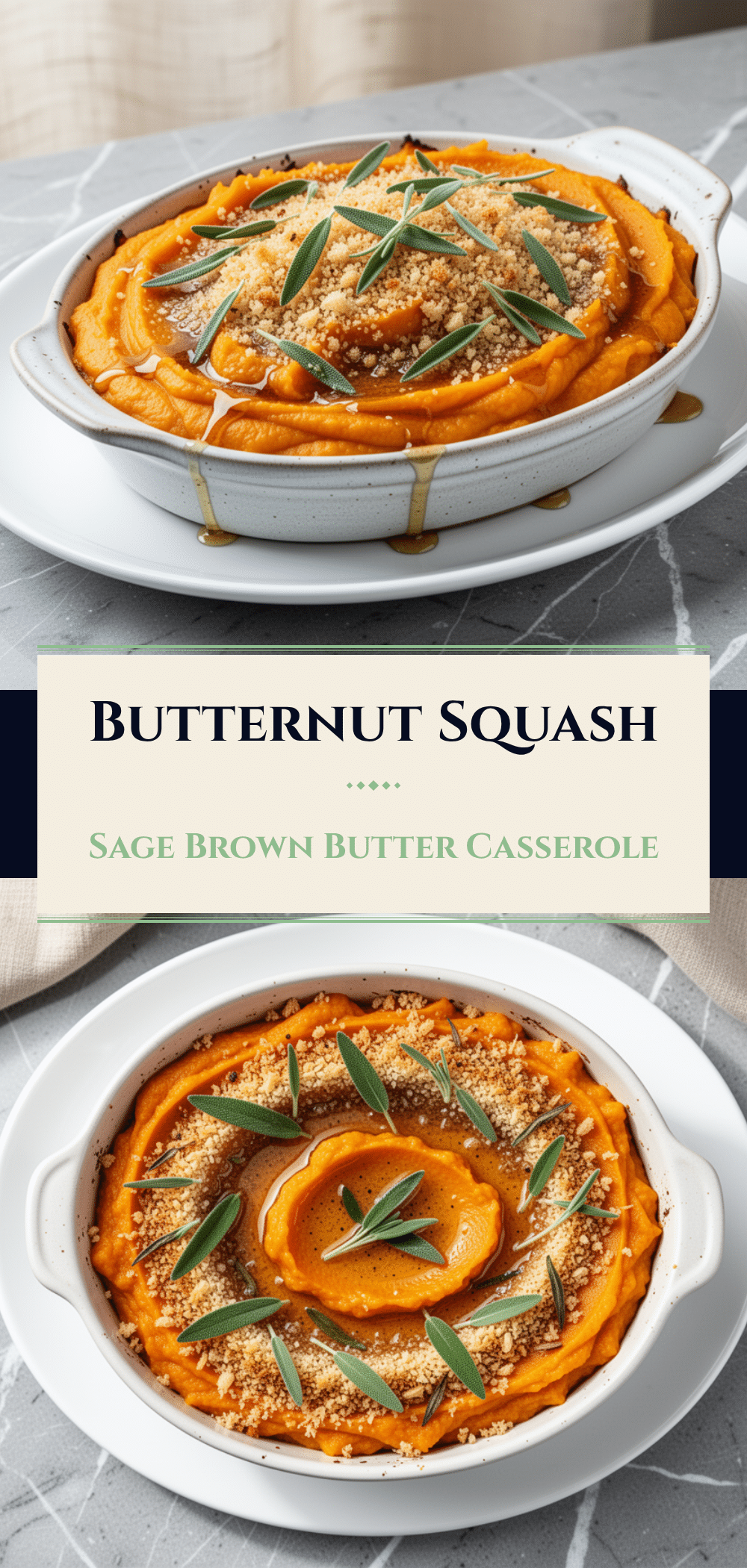

Butternut Squash Sage Brown Butter Casserole
- Total Time: 1 hour 30 minutes
- Yield: 8 servings 1x
Description
A creamy, savory Thanksgiving side dish featuring roasted butternut squash puree, rich brown butter, and fresh sage, topped with a crispy panko crust.
Ingredients
- 1 large butternut squash (3–4 lbs / 1.5–2 kg), peeled and cubed
- 1/2 cup unsalted butter
- 1 cup fresh sage leaves, packed
- 1/2 cup heavy cream
- 3 cloves garlic, minced
- 1/4 teaspoon freshly grated nutmeg
- 1 teaspoon kosher salt (or to taste)
- Freshly cracked black pepper (to taste)
- 1 tablespoon olive oil (for roasting squash)
- Optional: 1/2 cup panko breadcrumbs tossed with 1 tbsp melted butter
- Optional: 1/4 cup chopped pecans or walnuts
Instructions
- Preheat oven to 400°F (200°C). Cut squash in half, remove seeds, peel, and cube into 1-inch pieces. Toss with olive oil, salt, and pepper.
- Roast squash on a sheet pan for 45-60 minutes until tender and caramelized. Let cool slightly.
- Puree the roasted squash in a food processor until smooth. Taste and adjust salt if needed.
- In a small saucepan over medium heat, melt butter. Swirl occasionally until it turns amber and smells nutty (about 5-7 minutes). Do not burn.
- Immediately add sage leaves to the brown butter; they will sizzle and crisp in about 30 seconds. Remove from heat.
- In a large bowl, combine squash puree, brown butter with sage, heavy cream, garlic, nutmeg, salt, and pepper. Stir until well combined.
- Grease a 9×13 inch baking dish. Pour in the mixture and spread evenly.
- If using toppings, sprinkle panko breadcrumbs and chopped nuts over the top.
- Bake at 375°F (190°C) for 20-25 minutes until the top is golden brown and crispy.
- Serve warm.
Notes
Roasting the squash concentrates flavor and prevents a watery texture. Brown butter goes from perfect to burnt quickly, so watch it closely. This dish can be assembled the night before and refrigerated; let sit at room temperature for 30 minutes before baking. It does not freeze well due to the dairy.
- Prep Time: 30 minutes
- Cook Time: 1 hour
- Category: Side Dish
- Cuisine: American
Nutrition
- Serving Size: 1 cup
- Calories: 280
- Sugar: 8
- Sodium: 320
- Fat: 18
- Saturated Fat: 10
- Carbohydrates: 22
- Fiber: 3
- Protein: 4
Keywords: butternut squash, sage, brown butter, Thanksgiving side dish, casserole, fall recipes, vegetarian, holiday cooking