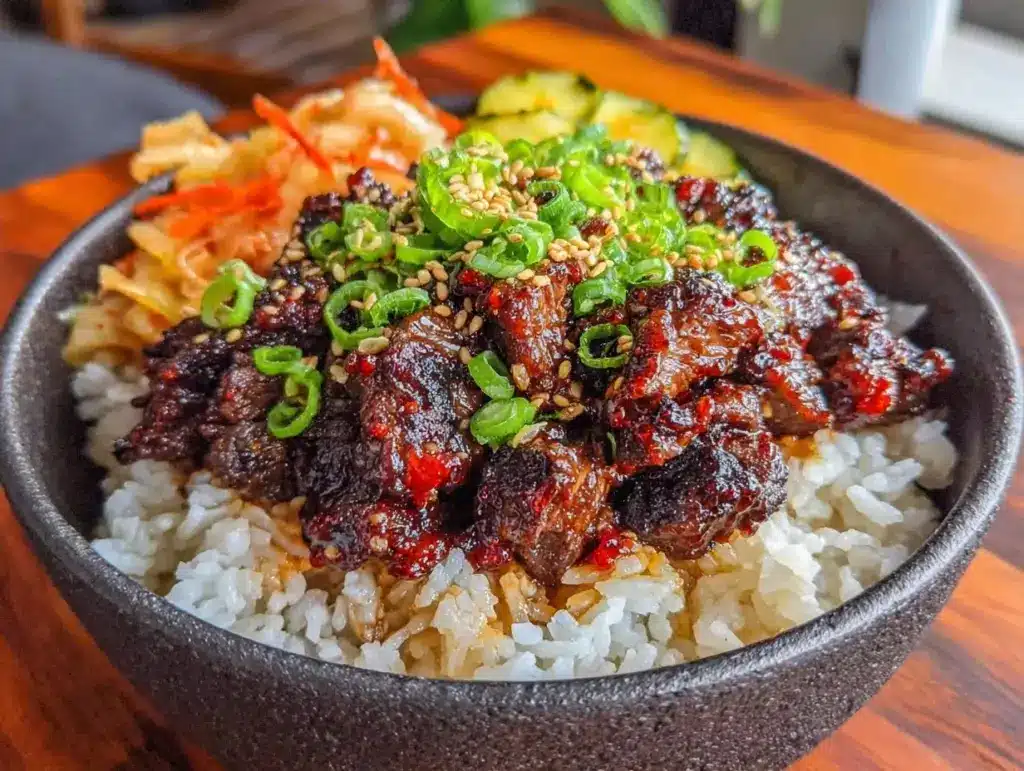
Last Saturday, I walked into the kitchen to find my seven-year-old standing on a step stool, intensely focused on whisking a bowl of dark, sticky sauce. He was wearing an apron that was slightly too big, and he had a smudge of soy sauce on his cheek. When I asked what he was making, he looked up with this huge grin and said, “The beef sauce. The one that makes the rice taste like candy.”
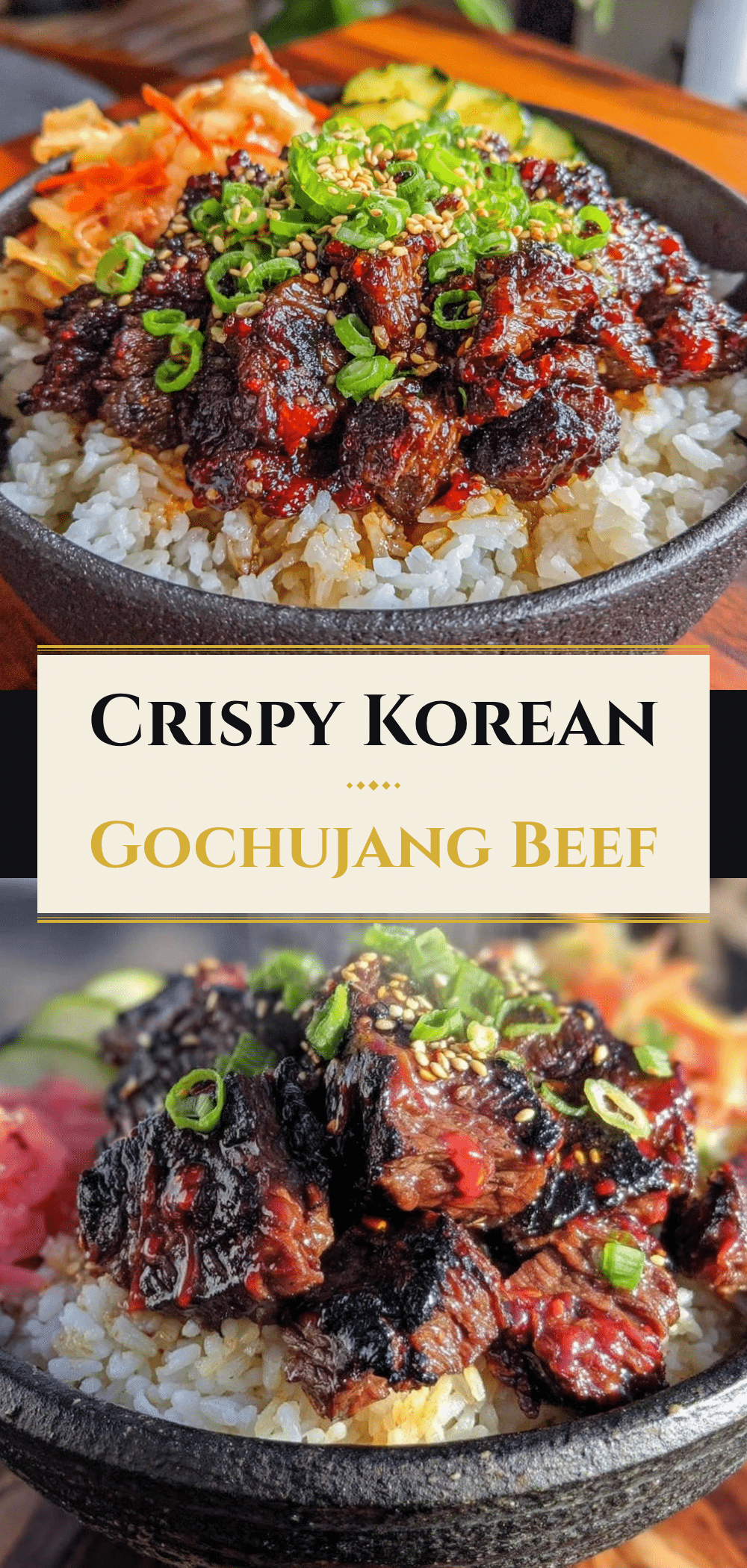
I wasn’t surprised. He’d been asking to make Korean Gochujang Beef Bulgogi Rice Bowls for weeks. Not because he loves spicy food (he actually doesn’t), but because he loves the process. He loves watching the beef sizzle. He loves picking the sesame seeds out of the jar and sprinkling them over the top. He loves the bright pink of the quick pickled onions he helped make the night before.
We’ve tried so many “kid-friendly” recipes that end up being bland compromises, or worse, dishes that require a chef’s precision to get right. But this Korean Bulgogi Bowls recipe is different. It’s forgiving. It’s messy in the fun way. And it turns a standard weeknight dinner into a shared project that feels like a game.
The best part? The kids do the heavy lifting. They mix the marinade. They toss the beef. They assemble their own bowls. You just handle the stove (because, safety first) and then sit down to eat what you made together. It’s become our favorite way to connect, and honestly, the food is so good that my husband thinks I hired a sous-chef.
Why You’ll Love This Recipe
There are a few reasons this has become a staple in our house, but let’s be real: the main reason is that my kids actually ask for seconds. But here’s what else makes this Korean Gochujang Beef Bulgogi Rice Bowls worth the trip to the Asian grocery store:
- It’s a Hands-On Project — This isn’t just “cook and serve.” It’s “cook and serve together.” From whisking the marinade to slicing the cucumbers for the quick pickles, there are safe, easy tasks for every age. My little one handles the sprinkling; my older one handles the whisking. It keeps them busy and proud.
- Flavor That Explodes — Gochujang (Korean chili paste) can sound intimidating, but it’s not just heat. It’s sweet, savory, fermented, and complex. When you balance it with brown sugar and sesame oil, it creates a glaze that clings to the beef perfectly. It tastes like something from a restaurant, but it’s faster and cheaper.
- The Quick Pickles Are the Hero — I know, I know. Pickles? In a beef bowl? Yes. We make a 20-minute refrigerator pickle with red onions and cucumbers. They add a crunchy, tangy contrast to the rich, sweet beef that cuts through the heaviness. My kids think they’re fancy “crunchy salad bits,” and they devour them.
- Customizable Heat Levels — This is huge for families. Gochujang varies in spiciness. You can use half a teaspoon for a mild, sweet glaze, or a full tablespoon for a kick. I let my kids choose their own spice level when they mix their bowls. It gives them control, which means they eat more.
- Leftovers Are Better — The beef marinade gets even more flavorful the next day. We often have leftover beef that we turn into creamy rice bowls with added veggies, or I just pack them for my husband’s lunch. It reheats beautifully in the microwave.
This recipe changed our dinner dynamic. Instead of fighting over what’s for dinner, we’re deciding which veggies to pickle and how spicy the beef should be. It’s less about feeding bodies and more about feeding our curiosity together.
Ingredients You’ll Need
Here’s the thing: you probably already have half of this in your pantry. The star ingredient, gochujang, might require a quick trip to the store, but it’s worth it. You’ll use it for so much more than just this bowl.
For the Beef Marinade
Thinly sliced beef (1 pound / 450g) — I use flank steak or sirloin. Ask your butcher to slice it paper-thin, or freeze it for 20 minutes to make slicing easier at home. Thin slices cook fast and absorb the marinade better.
Gochujang paste (2 tablespoons) — This is the Korean chili paste. Look for it in the Asian aisle. It’s thick and red. If you can’t find it, you can substitute with sriracha plus a teaspoon of miso paste, but the flavor won’t be quite the same. I love the brand Sempio.
Soy sauce (3 tablespoons) — Low sodium is better so you can control the salt. If you’re using regular soy sauce, reduce the added salt later.
Brown sugar (2 tablespoons) — This balances the heat from the gochujang. It also helps the beef caramelize in the pan. Light brown is fine, but dark brown has more molasses flavor.
Sesame oil (1 tablespoon) — Toasted sesame oil. This is non-negotiable. It gives that nutty, aromatic smell that makes your kitchen smell like a Korean restaurant. Do not use raw sesame oil.
Garlic (3 cloves, minced) — Fresh is best. If you’re feeling lazy, jarred garlic works, but fresh tastes brighter.
Fresh ginger (1 teaspoon, grated) — Again, fresh is better. It adds a warm, zesty note that lifts the heavy beef flavor.
Ground black pepper (½ teaspoon) — Just a pinch to add depth.
For the Quick Pickles
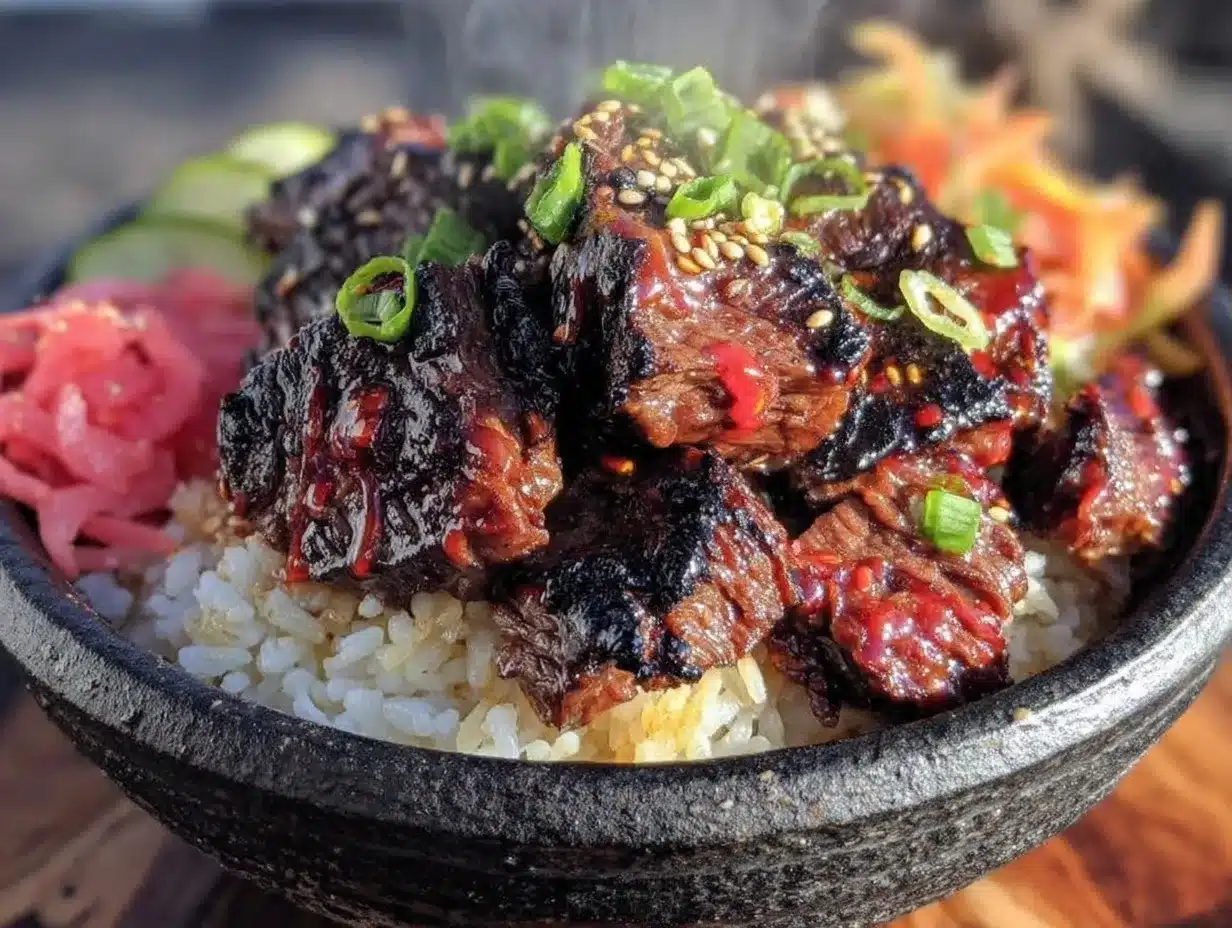
Red onion (½ medium, thinly sliced) — Red onion looks pretty and is milder than yellow. My kids love the pink color.
Cucumber (½ English cucumber, thinly sliced) — English cucumbers are less seedy. If you use a standard cucumber, scoop out the seeds first.
Rice vinegar (¼ cup) — Essential for that authentic tang. Apple cider vinegar works in a pinch, but rice vinegar is milder.
Sugar (1 tablespoon) — To balance the vinegar.
Salt (½ teaspoon) — Helps draw out the moisture from the veggies.
For Assembly
Steamed rice (4 cups) — Short-grain white rice is traditional and sticky, which holds the beef well. Jasmine rice works too if you prefer fluffier grains. We also love this over oat-based bowls if we’re swapping grains, but rice is the classic choice.
Sesame seeds (1 tablespoon, toasted) — Toast them in a dry pan for 2 minutes. It’s a 2-minute step that makes a huge difference.
Green onions (2, thinly sliced) — For garnish and crunch.
Optional add-ins — Sliced avocado, shredded carrots, or steamed broccoli. My kids love adding avocado slices on top right before eating.
Equipment Needed
You don’t need fancy gadgets. Here’s what I actually use:
Large skillet or wok — I use a 12-inch cast iron skillet. It holds heat well, which helps the beef sear. A non-stick wok works too if you’re worried about sticking.
Small bowl — For mixing the marinade. Let the kids do this part!
Medium bowl — For tossing the beef in the marinade.
Small jar with lid — For shaking up the quick pickle brine. A mason jar is perfect.
Sharp knife and cutting board — For slicing the beef and veggies. Keep this task for the adults, but let the kids slice softer items like cucumbers with a plastic knife.
Measuring spoons — Standard stuff. The kids can help measure if you give them their own set.
How to Make It: Step-by-Step
Alright, let’s get cooking! This is where the magic happens. I’m walking you through the steps, including the parts your kids can help with.
Step 1: Make the Quick Pickles (10 minutes active, 20 minutes resting)
Start here because the pickles need time to marinate. Thinly slice the red onion and cucumber. Put them in a heat-proof bowl or a jar. In a small bowl, whisk together the rice vinegar, sugar, and salt until dissolved. Pour this brine over the veggies. Toss to coat. Set aside for at least 20 minutes. This is a great time for kids to help—let them pour the brine and stir. The veggies will turn a pretty pink color.
Step 2: Mix the Marinade (5 minutes)
In a small bowl, whisk together the gochujang, soy sauce, brown sugar, sesame oil, minced garlic, grated ginger, and black pepper. It should be a thick, dark red paste. This is the most fun part for kids. Let them whisk it until it’s smooth. Smell it! It smells amazing.
Step 3: Marinate the Beef (15-30 minutes)
Place the thinly sliced beef in a large bowl or a zip-top bag. Pour the marinade over the beef. Toss to coat every piece. If using a bag, seal it and massage the marinade into the meat. Let it sit at room temperature for 15-30 minutes. Do not marinate for too long (more than 2 hours) because the acid in the soy sauce can start to break down the meat too much, making it mushy. My kids love massaging the beef in the bag—it feels like a game.
Step 4: Cook the Beef (5-7 minutes)
Heat a large skillet or wok over high heat. Add a tablespoon of neutral oil (like vegetable or canola). Once the oil is shimmering, add the beef in a single layer. Don’t crowd the pan! If you have a lot of beef, cook it in two batches. Crowding the pan steams the beef instead of searing it, and you want a nice crust. Let it cook undisturbed for 2-3 minutes until browned, then flip and cook for another 2-3 minutes. The beef should be cooked through but still tender. Remove from heat.
Step 5: Prepare the Rice
While the beef cooks, make sure your rice is ready. Fluff it with a fork. If you’re using instant rice, now is the time. If you’re cooking from scratch, start it when you start the pickles.
Step 6: Assemble the Bowls
Drain the quick pickles, reserving a little of the brine if you want extra tang. Place a scoop of rice in each bowl. Top with the hot beef. Add a generous spoonful of the quick pickles. Sprinkle with toasted sesame seeds and sliced green onions. If you’re adding avocado or carrots, add them now.
Total Time: About 45 minutes (15 minutes active for adults, 30 minutes for kids to help with prep and assembly).
Expert Tips & Tricks
Here’s everything I’ve learned from making this dozens of times. These tips will save you from my mistakes.
Slice the Beef Against the Grain — This is crucial for tender beef. Look for the lines of muscle fibers and cut perpendicular to them. If you cut with the grain, the beef will be chewy. My husband is in charge of this step because it requires a sharp knife.
Don’t Skip the Sesame Oil — It’s potent. A little goes a long way. If you forget it, the dish will taste flat. I’ve made this mistake before, and the kids noticed immediately. “Mom, where’s the nutty smell?”
High Heat for the Beef — You want a sear, not a boil. Get that pan hot before adding the beef. If it’s not hot enough, the beef will release water and stew in its own juices. High heat = caramelized, delicious crust.
Toast the Sesame Seeds — Raw sesame seeds are fine, but toasted ones add a nutty crunch that elevates the whole dish. It takes 2 minutes in a dry pan. Shake the pan constantly so they don’t burn. Burnt sesame seeds taste bitter, so watch them closely.
Balance the Spice — Gochujang brands vary. If you’re worried about heat, start with 1 tablespoon and taste the marinade before adding it to the beef. You can always add more, but you can’t take it out. For my kids, I make a separate batch with just 1 teaspoon.
Variations & Substitutions
Once you’ve nailed the basic version, here’s how you can mix it up. I’ve tried all of these.
Pork Bulgogi — Swap beef for thinly sliced pork shoulder. It’s even more tender and juicy. My kids actually prefer pork because it’s milder.
Tofu Bulgogi — Press extra-firm tofu, slice it into cubes, and marinate it just like the beef. Pan-fry until crispy. It’s a great vegetarian option that still tastes like the real thing. Serve with a fruit crisp for dessert to keep the meal light.
Chicken Bulgogi — Use chicken thighs, sliced thin. They stay juicier than breasts. Marinate for 30 minutes. Cook until golden.
No Gochujang? — Mix 1 tablespoon sriracha, 1 tablespoon soy sauce, 1 teaspoon miso paste, and 1 teaspoon sesame oil. It’s not authentic, but it’s close enough for a quick fix.
Gluten-Free — Use tamari instead of soy sauce and check your gochujang label (some brands contain wheat). Most are gluten-free, but always double-check.
Veggie Boost — Add steamed broccoli or sautéed spinach to the bowls. My kids will eat anything if it’s covered in the beef sauce.
Serving & Storage
How to Serve: I like to set out the bowls and let everyone build their own. It’s like a salad bar but with hot beef. Put the pickles, beef, rice, and toppings in separate bowls on the table. Let the kids choose their combinations. It makes them feel in control.
Side Dishes: These bowls are pretty complete on their own. But if you want sides, try crispy kale chips for a crunchy appetizer, or serve with queso dip if you’re feeling adventurous. A simple raspberry lemonade spritzer is a refreshing drink to pair with the spicy beef.
Storage: Store leftovers in an airtight container in the fridge for up to 3 days. The beef will get softer, but it’s still delicious.
Reheating: Microwave the beef and rice together with a splash of water. The water creates steam and keeps the beef from drying out. Stir halfway through. The pickles are best fresh, but they’ll keep in the fridge for a week.
Freezing: You can freeze the cooked beef for up to 2 months. Thaw in the fridge and reheat gently. The pickles do not freeze well.
Nutrition Information
I’m not a nutritionist, but here’s the breakdown if you’re tracking. This is per serving (based on 4 servings).
- Calories: 550
- Protein: 35g
- Carbs: 60g
- Fiber: 3g
- Sugar: 12g
- Fat: 18g
- Sodium: 900mg
It’s higher in sodium due to the soy sauce and gochujang, so use low-sodium soy sauce if you’re watching salt. The protein content is great from the beef, and the pickles add some probiotics. It’s a balanced meal if you load up on the veggies.
Final Thoughts
So that’s my Korean Gochujang Beef Bulgogi Rice Bowls! I know it’s a lot of steps, but remember: the kids do the prep. You just cook. And the result is a meal that feels special, tastes amazing, and brings the family together.
This recipe has saved our weeknights. It’s not about speed; it’s about connection. It’s about watching my son carefully sprinkle sesame seeds and knowing that he’s proud of what he made. It’s about my daughter arguing over who gets the last pickle slice. It’s about real, messy, delicious family time.
Make it yours! Add more veggies, less spice, more avocado. The best recipes are the ones you adapt to your family’s tastes. If you make this, drop a comment and let me know what your kids loved most! I love hearing how recipes turn out in your kitchen.
Happy cooking! And I hope your kitchen smells half as good as mine does right now.
Frequently Asked Questions
Can I use ground beef instead of sliced beef?
You can, but the texture will be different. Ground beef works if you’re short on time. Just brown it in the pan, then stir in the marinade. It’s less authentic, but still tasty. My kids don’t mind it, but I prefer the sliced version for the chewy texture.
Why is my gochujang so spicy?
Gochujang varies by brand. Some are very hot, some are mild. If yours is spicy, reduce the amount you use or add more brown sugar to balance it. You can also add a splash of rice vinegar to cut the heat. Always taste the marinade before cooking!
Can I make the pickles ahead of time?
Yes! The pickles actually get better after 24 hours. Make them up to 3 days ahead and store them in the fridge. They’ll stay crunchy and tangy. This is a great way to prep for busy weeknights.
What kind of rice is best?
Short-grain white rice is traditional because it’s sticky and holds the beef well. Jasmine rice is a good substitute if you prefer fluffier grains. Avoid brown rice if you want the classic texture, as it’s too chewy. But if you’re watching carbs, cauliflower rice works too!
Can I use chicken instead of beef?
Absolutely! Chicken thighs are the best choice because they stay juicy. Slice them thin and marinate for 30 minutes. Cook them until golden brown. It’s a great alternative if your family prefers poultry.
How do I store leftovers?
Store the beef and rice in separate containers. The beef will keep for 3 days in the fridge. The pickles can last up to a week. Reheat the beef and rice together with a splash of water in the microwave.
Is gochujang hard to find?
It’s becoming more popular, so you can usually find it in the Asian aisle of most large grocery stores. If not, check online. It keeps for months in the pantry, so buy a jar and you’ll use it for so much more than just this recipe.
Pin This Recipe!
Korean Gochujang Beef Bulgogi Rice Bowls
- Total Time: 45 minutes
- Yield: 4 servings 1x
Description
A kid-friendly, hands-on Korean beef bowl recipe featuring a sweet and savory gochujang marinade, quick pickled onions, and customizable spice levels.
Ingredients
- 1 pound thinly sliced beef (flank steak or sirloin)
- 2 tablespoons gochujang paste
- 3 tablespoons soy sauce (low sodium recommended)
- 2 tablespoons brown sugar
- 1 tablespoon toasted sesame oil
- 3 cloves garlic, minced
- 1 teaspoon fresh ginger, grated
- ½ teaspoon ground black pepper
- ½ medium red onion, thinly sliced
- ½ English cucumber, thinly sliced
- ¼ cup rice vinegar
- 1 tablespoon sugar
- ½ teaspoon salt
- 4 cups steamed short-grain white rice
- 1 tablespoon toasted sesame seeds
- 2 green onions, thinly sliced
- 1 tablespoon neutral oil (for cooking)
Instructions
- Thinly slice the red onion and cucumber. Place them in a heat-proof bowl or jar.
- Whisk together rice vinegar, sugar, and salt until dissolved. Pour over the veggies, toss to coat, and set aside for at least 20 minutes.
- In a small bowl, whisk together gochujang, soy sauce, brown sugar, sesame oil, garlic, ginger, and black pepper to form a thick paste.
- Place the sliced beef in a large bowl or zip-top bag. Pour the marinade over the beef and toss to coat. Let sit at room temperature for 15-30 minutes.
- Heat a large skillet or wok over high heat with neutral oil. Add beef in a single layer (cook in batches if necessary) and sear for 2-3 minutes per side until browned and cooked through.
- Fluff the steamed rice with a fork.
- Drain the quick pickles. Assemble bowls by placing rice at the bottom, topping with hot beef, adding pickles, and sprinkling with sesame seeds and green onions.
Notes
Slice beef against the grain for tenderness. Do not marinate beef for more than 2 hours to prevent mushiness. Gochujang spice levels vary by brand; adjust sugar or amount to taste. Pickles can be made up to 3 days ahead.
- Prep Time: 15 minutes
- Cook Time: 30 minutes
- Category: Main Course
- Cuisine: Korean
Nutrition
- Serving Size: 1 bowl per serving
- Calories: 550
- Sugar: 12
- Sodium: 900
- Fat: 18
- Saturated Fat: 5
- Carbohydrates: 60
- Fiber: 3
- Protein: 35
Keywords: Korean beef, bulgogi, rice bowls, gochujang, kid-friendly recipes, weeknight dinner, quick pickles, family cooking