
It’s that time of year when the light changes. The sun dips lower, the air gets crisp, and there’s a heavy, quiet feeling that settles in my bones around 6 PM. I’ve been there—staring into the fridge, too tired to think, too drained to order takeout, but also too exhausted to cook something that feels like work. My kitchen feels cold. The world feels loud. I just want to come home to something that smells like comfort.
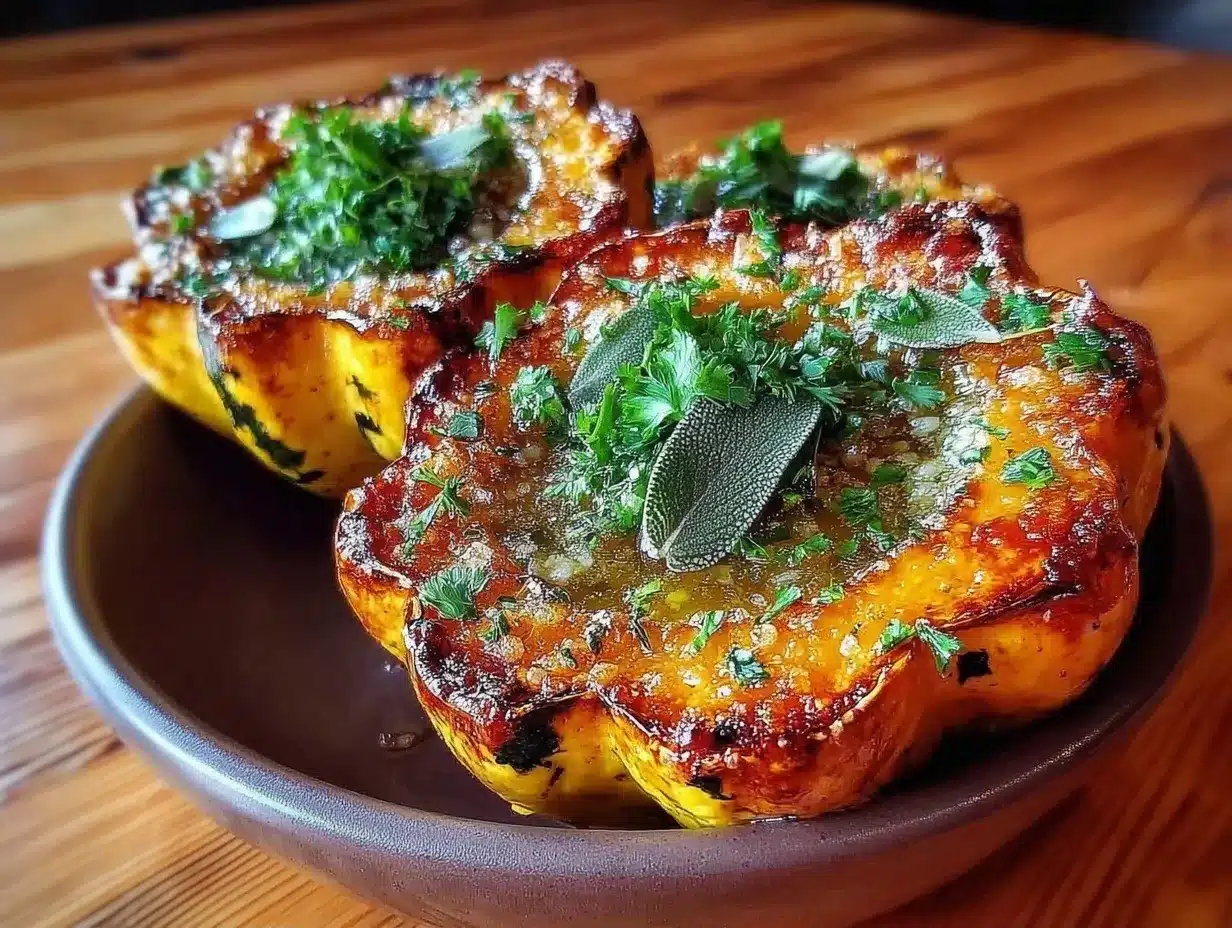
That’s why this Autumn Brown Sugar Roasted Acorn Squash with Sage Butter has become my anchor. It’s not about efficiency. It’s not about “quick weeknight hacks” or squeezing dinner into a ten-minute window. It’s about the ritual. It’s about the smell of brown sugar and toasted sage filling the house, wrapping around you like a warm blanket, telling your nervous system to finally exhale.
I started making this when I was going through a season of serious burnout. I needed dinner that required almost no mental energy but still felt like an act of kindness toward myself. Roasting squash is slow. It’s passive. You cut, you drizzle, you throw it in the oven, and then you wait. You can sit on the couch. You can read a few pages of a book. You can just breathe. When the timer goes off, the house smells like autumn, and the squash is sweet, tender, and salty all at once.
This isn’t a fancy dinner party dish. It’s a self-care dinner. It’s the one to make when you need to take care of yourself, when the day has been hard, and you need something warm, simple, and nourishing to remind you that you’re okay. It’s sweet, it’s savory, and it’s deeply, quietly comforting. Let me walk you through how to make it, step by gentle step.
Why You’ll Love This Recipe
There are a few reasons this Autumn Brown Sugar Roasted Acorn Squash with Sage Butter has stayed in my rotation for years, but they’re not the usual reasons you see on recipe sites. It’s not just because it tastes good (though it really does). It’s because it fits into the kind of evening I need most often.
It’s Passive Cooking — Once the squash is in the oven, it’s done. You don’t need to stand over a stove, stirring, watching, worrying. You can leave the kitchen. This is huge for me when I’m mentally fried. I can set the timer and go do something that actually recharges me.
It Smells Like Therapy — I’m not exaggerating. The combination of brown sugar caramelizing and sage butter melting into the squash creates an aroma that is instantly calming. It smells like a hug. It smells like home. It shifts the mood of the entire house from “cold and sterile” to “warm and inviting.”
It’s Sweet and Savory Balance — Acorn squash is naturally sweet, but it can get cloying if you’re not careful. The sage butter cuts through that sweetness with a salty, herbal punch. The brown sugar adds depth, not just sweetness. It’s a perfect balance that keeps every bite interesting.
It’s Gentle on the Body — After a heavy, stressful day, my stomach doesn’t want anything too spicy or acidic. Squash is soft, easy to digest, and full of vitamins. It’s nourishing without being heavy. It feels good to eat something that makes my body feel good, too.
It’s Minimal Cleanup — I’m talking one baking sheet, one small saucepan for the butter, and maybe a knife and cutting board. That’s it. No dirty pots, no complicated utensils. Just simple, clean, easy. When you’re tired, the last thing you want is a sink full of dishes.
This recipe has saved me on so many evenings. It’s my answer to “what’s for dinner” when I have no energy but still want to eat something that feels special. It’s quiet, it’s simple, and it’s deeply satisfying. If you’re looking for a way to wind down and care for yourself through food, this is it.
Ingredients You’ll Need
One of the best things about this Autumn Brown Sugar Roasted Acorn Squash with Sage Butter is how few ingredients it uses. You don’t need a pantry full of spices or exotic items. Just a few simple, wholesome things that come together to make something truly special. Here’s what you’ll need, and why each piece matters.
For the Squash
Acorn Squash (1 large, about 2-3 pounds / 900g-1.3kg) — This is the star. Acorn squash has a nice balance of sweetness and earthiness. Look for one that feels heavy for its size and has a hard shell. If it’s soft or has dents, it’s past its prime. I usually buy these at the grocery store in the fall, but they’re available year-round.
Coconut Oil or Olive Oil (2 tablespoons / 30ml) — I prefer coconut oil for this because it has a subtle sweetness that pairs well with the brown sugar. Olive oil works too, but it has a stronger flavor that might compete with the sage. Melt it slightly before drizzling so it coats the squash evenly.
Brown Sugar (2 tablespoons / 25g) — Light or dark brown sugar both work. Dark sugar has more molasses, so it’s a bit richer and more caramel-like. I like using dark brown sugar for that deep, toffee flavor, but light is fine if that’s all you have. Don’t use white sugar—it doesn’t caramelize the same way.
Kosher Salt (½ teaspoon / 3g) — Salt is crucial. It brings out the natural sweetness of the squash. I use kosher salt because it’s easier to sprinkle evenly. If you use table salt, use half the amount because it’s more concentrated.
Black Pepper (¼ teaspoon / 0.5g) — Just a little bit adds warmth and depth. Freshly ground is best, but pre-ground works in a pinch.
For the Sage Butter
Unsalted Butter (3 tablespoons / 45g) — Good quality butter makes a difference here. I use European-style butter if I can find it, because it’s richer and creamier. But any good unsalted butter will work. The key is that it’s unsalted, so you can control the saltiness.
Fresh Sage Leaves (10-12 leaves, chopped / about 10g) — Fresh sage is non-negotiable. Dried sage has a dusty, muted flavor that doesn’t work here. You want that bright, piney, slightly peppery taste. If you can’t find fresh sage, look for it at the grocery store or grow it on a windowsill—it’s easy to keep alive.
Garlic (1 small clove, minced / about ½ teaspoon) — Just one clove. You don’t want garlic to overpower the sage. It’s there to add a subtle background note of warmth. If you’re sensitive to garlic, you can skip it, but I recommend keeping it.
Optional: Red Pepper Flakes (pinch) — If you like a tiny hint of heat, add a pinch of red pepper flakes to the butter. It adds a nice contrast to the sweetness. I add it sometimes, but it’s not necessary.
Shopping Tips
Acorn Squash Selection — Pick one that’s firm and heavy. Avoid any with soft spots or cracks. If it feels light, it might be dried out inside.
Fresh Sage — Look for bright green leaves, not yellow or wilted. If they’re limp, they’re old. Fresh sage should snap when you bend it.
Butter — Stick to unsalted. Salted butter can make the dish too salty, especially since you’re adding salt to the squash.
I keep these ingredients stocked in the fall because they’re so easy to work with. You probably have most of them already. If not, it’s a quick trip to the store, and the result is worth it.
Equipment Needed
You don’t need any fancy gadgets or special tools for this. Just basic kitchen stuff you probably already have. Here’s what I actually use, and why.
Baking Sheet — I use a standard 13×18 inch rimmed baking sheet. It’s big enough to fit the squash halves without crowding. Crowding leads to steaming instead of roasting, and we want caramelization. If you have a smaller sheet, you might need to do two batches, but one large sheet is ideal.
Cutting Board — Any sturdy cutting board works. I prefer a thick wooden one because it doesn’t slip. Acorn squash can be hard to cut, so make sure your board is stable.
Chef’s Knife — A sharp knife is essential here. Acorn squash has a hard shell, so a dull knife will slip and be dangerous. I use my 8-inch chef’s knife for this. If your knife is dull, consider getting it sharpened—it makes cooking safer and easier.
Small Saucepan — I use a 1-quart saucepan for melting the butter and sage. It’s small enough to heat evenly but big enough to hold the ingredients. A microwave-safe bowl works too if you’re heating the butter in the microwave, but a saucepan gives you more control.
Measuring Spoons — Basic stuff. I use a set of standard measuring spoons. You don’t need to be perfect, but having them helps.
Parchment Paper — Optional, but I recommend it. It makes cleanup easier and prevents the squash from sticking. I line my baking sheet with parchment paper every time.
Oven — Obviously, you need an oven. Preheat it to 400°F (200°C). Make sure it’s properly calibrated. If your oven runs hot or cold, you might need to adjust the time slightly.
Small Bowl — For mixing the squash with oil and sugar before roasting. Any small bowl works.
Spatula — For flipping the squash halfway through cooking. A silicone spatula is good because it won’t scratch the baking sheet.
You don’t need anything fancy. Just a knife, a cutting board, a baking sheet, and a saucepan. That’s it. Simple, clean, easy.
How to Make It: Step-by-Step
Alright, let’s make this Autumn Brown Sugar Roasted Acorn Squash with Sage Butter. I’m walking you through exactly how I do it, including the little tricks I’ve picked up over the years. This isn’t complicated, but there are a few key steps that make a big difference in the final result.
Step 1: Prep the Squash (10 minutes)
First, preheat your oven to 400°F (200°C). Line a baking sheet with parchment paper. This makes cleanup a breeze and prevents sticking.
Wash the acorn squash thoroughly. Dry it off with a towel. Now, here’s the tricky part: cutting it open. Acorn squash has a hard shell, so be careful. Place the squash on a stable cutting board. Use a sharp chef’s knife to cut it in half lengthwise. Start by making a small incision in the center, then work your way down, using a gentle sawing motion. Don’t force it—let the knife do the work. If it’s really hard, you can microwave the whole squash for 1-2 minutes to soften it slightly before cutting.
Once it’s cut in half, use a spoon to scoop out the seeds and stringy pulp. Discard the seeds (or save them to roast later if you want). You should have two clean halves.
Step 2: Season the Squash (5 minutes)
Place the squash halves cut-side up on the prepared baking sheet. Drizzle each half with about 1 tablespoon of melted coconut oil or olive oil. Use a brush or your fingers to spread the oil evenly over the flesh.
Sprinkle each half with 1 tablespoon of brown sugar, ¼ teaspoon of kosher salt, and ⅛ teaspoon of black pepper. Make sure to get the sugar into the crevices where the seeds were. This is where the caramelization happens, so don’t skimp.
Press the sugar and seasoning gently into the flesh so it sticks. You don’t need to be perfect—just make sure each half is evenly coated.
Step 3: Roast the Squash (35-40 minutes)
Place the baking sheet in the preheated oven. Roast for 35-40 minutes. The squash is done when it’s tender all the way through. You can test this by inserting a fork or knife into the thickest part of the flesh. If it slides in easily with no resistance, it’s ready.
Halfway through the cooking time (around 20 minutes), flip the squash halves over. This ensures even browning on both sides. The sugar will start to caramelize and bubble, which is exactly what you want. It should look golden brown and slightly crisp on the edges.
Keep an eye on it as it finishes roasting. Depending on your oven, it might take a few minutes longer or shorter. Just keep checking with the fork test.
Step 4: Make the Sage Butter (5 minutes)
While the squash is roasting, make the sage butter. In a small saucepan over medium-low heat, melt the 3 tablespoons of unsalted butter. Don’t let it brown—just melt it until it’s liquid and bubbly.
Add the chopped fresh sage leaves and minced garlic to the melted butter. Stir gently and let it cook for 1-2 minutes. The sage will release its aroma, and the butter will turn a beautiful green color. If you’re adding red pepper flakes, add them now.
Remove the saucepan from the heat. The butter should be fragrant and hot, but not burnt. If the garlic starts to brown, take it off the heat immediately—it will turn bitter.
Step 5: Combine and Serve (5 minutes)
Once the squash is done roasting, remove it from the oven. It should be tender, caramelized, and fragrant. The sugar should have melted into a glossy, sticky glaze.
Drizzle the sage butter generously over each half. Use a spoon to scoop up some of the butter from the pan and pour it into the crevices of the squash. The butter will melt into the hot flesh, adding a rich, herbal finish.
Let the squash rest for 2-3 minutes. This allows the flavors to meld and the butter to soak in. Then, serve immediately while it’s hot.
Total Time: About 55-60 minutes (15 minutes active, 40-45 minutes passive roasting)
Expert Tips & Tricks
Here’s everything I’ve learned from making this dozens of times. These tips will save you from my mistakes and help you get the best possible result.
Don’t Skip the Parchment Paper — The brown sugar will caramelize and stick to the pan if you don’t use parchment. Cleaning a baked-on sugar mess is miserable. Parchment paper makes cleanup take 10 seconds instead of 10 minutes.
Flip Halfway Through — I used to forget this and wonder why one side was burnt and the other was pale. Flipping ensures even cooking and browning. It’s a small step that makes a big difference.
Test for Tenderness, Not Time — Every oven is different. Don’t rely solely on the timer. Use the fork test. If the fork doesn’t slide in easily, keep roasting. It’s better to under-roast slightly than to have raw, hard squash.
Use Fresh Sage — I can’t stress this enough. Dried sage tastes dusty and muted. Fresh sage has a bright, piney flavor that transforms the dish. If you can’t find fresh, it’s better to skip the sage than to use dried.
Don’t Burn the Butter — When making the sage butter, keep the heat low. You want to infuse the butter with sage flavor, not burn the garlic. If the butter browns or the garlic turns dark, it will taste bitter. Low and slow is the way to go.
Save the Seeds — Don’t throw away the seeds! Rinse them, pat them dry, toss them with a little salt and oil, and roast them at 350°F for 10-15 minutes. They make a great snack or topping for salads. I love having roasted squash seeds as a side.
Adjust Sweetness to Taste — Some acorn squashes are sweeter than others. If yours is particularly sweet, you might want to reduce the brown sugar slightly. If it’s more earthy, you can add a bit more. Taste as you go.
Let It Rest — After drizzling the sage butter, let the squash rest for a few minutes before eating. This allows the butter to soak in and the flavors to meld. It’s worth the wait.
Variations & Substitutions
Once you’ve nailed the basic version, here’s how you can mix it up. I’ve tried all of these, and they all work well.
Maple Glaze Version — Swap the brown sugar for pure maple syrup. Drizzle 2 tablespoons of maple syrup over the squash before roasting. It adds a different kind of sweetness—more floral and less molasses-like. I like this version in the spring or summer.
Honey Thyme Variation — Replace the sage butter with honey and fresh thyme. Melt the butter, add 1 tablespoon of honey and chopped thyme leaves. Drizzle over the squash. It’s lighter and more delicate.
Spicy Sage Butter — Add a pinch of red pepper flakes and a dash of smoked paprika to the sage butter. It adds a smoky heat that contrasts nicely with the sweetness. I like this when I want something with a bit of kick.
Pecan Crumble Topping — After roasting, sprinkle chopped pecans over the squash and drizzle with the sage butter. Toast the pecans in a dry pan first for extra flavor. It adds crunch and richness.
Apple Cinnamon Twist — Add thin slices of apple to the baking sheet with the squash. Roast them together. The apples caramelize and add another layer of sweetness. I like this with a cinnamon sprinkle on top.
Dairy-Free Option — Replace the butter with coconut oil or olive oil. Make a sage-infused oil by heating the oil with sage leaves and letting it cool. Drizzle over the squash. It’s still delicious, just not as rich.
Vegan Option — Use coconut oil or olive oil instead of butter, and skip the cheese if you’re adding any. The squash itself is vegan, so it’s easy to adapt.
Different Squash — You can use butternut squash or delicata squash instead of acorn. Butternut is sweeter, and delicata is thinner-skinned and easier to eat. Adjust the cooking time slightly—delicata cooks faster.
Serving & Storage
How to Serve: I usually serve this straight from the baking sheet, warm and steaming. It’s rustic and cozy. But here are other ways I’ve enjoyed it:
Side Dishes: This squash pairs beautifully with roasted chicken or turkey. It’s also great alongside smoky roasted salsa for a colorful, flavorful meal. Or serve it with a simple green salad to balance the sweetness.
Toppings Bar: When I have guests, I put out extra sage butter, chopped pecans, and a drizzle of balsamic glaze. Everyone customizes their bowl.
Wine Pairing: Not a wine expert, but my wine-snob friend says a light Pinot Noir or a crisp Chardonnay works great with this. The sweetness of the squash pairs well with fruity wines.
Storage Instructions:
Refrigerator: Store leftovers in an airtight container for up to 3 days. The squash will soften further in the fridge, which is normal. The sage butter will solidify, but it melts back when reheated.
Reheating: Best method: Reheat in the oven at 350°F for 10-15 minutes. This restores the texture and keeps the caramelization. Microwave method: Heat in 30-second intervals, stirring between. It gets softer but still tastes good. Avoid reheating in a skillet—it can get mushy.
Freezing: Honestly, this doesn’t freeze well. The texture of the squash changes, and the butter can separate. Make it fresh or store in the fridge for up to 3 days.
Meal Prep: You can prep the squash ahead of time. Cut and season it, store it in the fridge for up to 24 hours, then roast when ready. This saves time on busy nights.
Nutrition Information
I’m not a nutritionist, but here’s the breakdown if you’re tracking. This is per serving (based on 4 servings, 1 half squash per serving).
| Nutrient | Amount |
|---|---|
| Calories | 180 |
| Protein | 2g |
| Carbs | 28g |
| Fiber | 6g |
| Sugar | 18g |
| Fat | 8g |
| Saturated Fat | 5g |
| Cholesterol | 20mg |
| Sodium | 350mg |
| Calcium | 80mg |
What’s Good: High in fiber and vitamins A and C. The squash is naturally nutrient-dense. The sage adds antioxidants.
What to Know: Higher in sugar from the brown sugar, but it’s natural sugar with fiber. Contains dairy from the butter. Moderate sodium.
My Take: This is comfort food, but it’s not junk food. It’s wholesome, nourishing, and satisfying. It’s not a diet recipe, but it’s not unhealthy either. It’s just good, simple food. When I eat this, I feel cared for. That’s what matters.
Final Thoughts
So that’s my Autumn Brown Sugar Roasted Acorn Squash with Sage Butter. I’ve probably talked your ear off at this point, but when you make a recipe this often, you have a lot to say about it. It’s not just about the taste—it’s about the feeling. It’s about coming home to a warm house, a soft meal, and a moment of peace.
This has saved me on so many hard days. It’s my answer to “what’s for dinner” when I’m tired, don’t want takeout, and still want something that tastes really good. It’s quiet, it’s simple, and it’s deeply satisfying. It’s the one to make when you need to take care of yourself.
Make it yours! Try different variations, swap in your favorite herbs, adjust the sweetness. The best recipes are the ones you adapt to your own tastes. If you make this, drop a comment and let me know what you think! I love hearing how recipes turn out in your kitchen. And if something doesn’t work, tell me that too—I’m here to help troubleshoot.
Happy cooking! And I hope your kitchen smells half as good as mine does right now.
Frequently Asked Questions
Can I use a different type of squash?
Yes! Butternut squash is sweeter and cooks faster. Delicata squash is thinner-skinned and easier to eat. Just adjust the cooking time—delicata takes about 25-30 minutes, while butternut takes 30-35 minutes. Acorn squash is my favorite for its texture and flavor balance.
Why did my squash turn out watery?
This usually happens if the squash wasn’t cut properly or if the oven temperature was too low. Make sure you scoop out all the seeds and pulp. Also, check your oven temperature with a thermometer—it might be running cool. Roasting at 400°F ensures the water evaporates and the sugar caramelizes.
Can I make this ahead for a dinner party?
Sort of. You can prep the squash ahead of time (cut, season, and store in the fridge for up to 24 hours). Roast it right before serving. The sage butter should be made fresh and drizzled on just before eating. It won’t be quite as good as fresh, but it’s close and saves you stress during the party.
Can I use dried sage instead of fresh?
You can, but the flavor won’t be the same. Dried sage is more muted and dusty. If you must use it, use half the amount (about ½ teaspoon) because it’s more concentrated. But I really recommend fresh sage for this recipe. It makes a huge difference.
How do I reheat leftovers without it getting dry?
Reheat in the oven at 350°F for 10-15 minutes. This restores the texture and keeps the caramelization. Microwave it in 30-second intervals, stirring between. Add a splash of water if it’s too dry. Avoid reheating in a skillet—it can get mushy.
Can I double this recipe?
Absolutely! Double everything and use two baking sheets if needed. The cooking times stay the same. I do this when I’m meal-prepping or feeding a crowd. Just make sure the squash halves aren’t crowded on the sheets—they need space to roast properly.
Is this recipe gluten-free?
Yes, this recipe is naturally gluten-free. Acorn squash, butter, sage, and brown sugar are all gluten-free. Just make sure your brown sugar doesn’t have any additives (most don’t, but check the label). It’s a safe option for gluten-free diets.
Pin This Recipe!
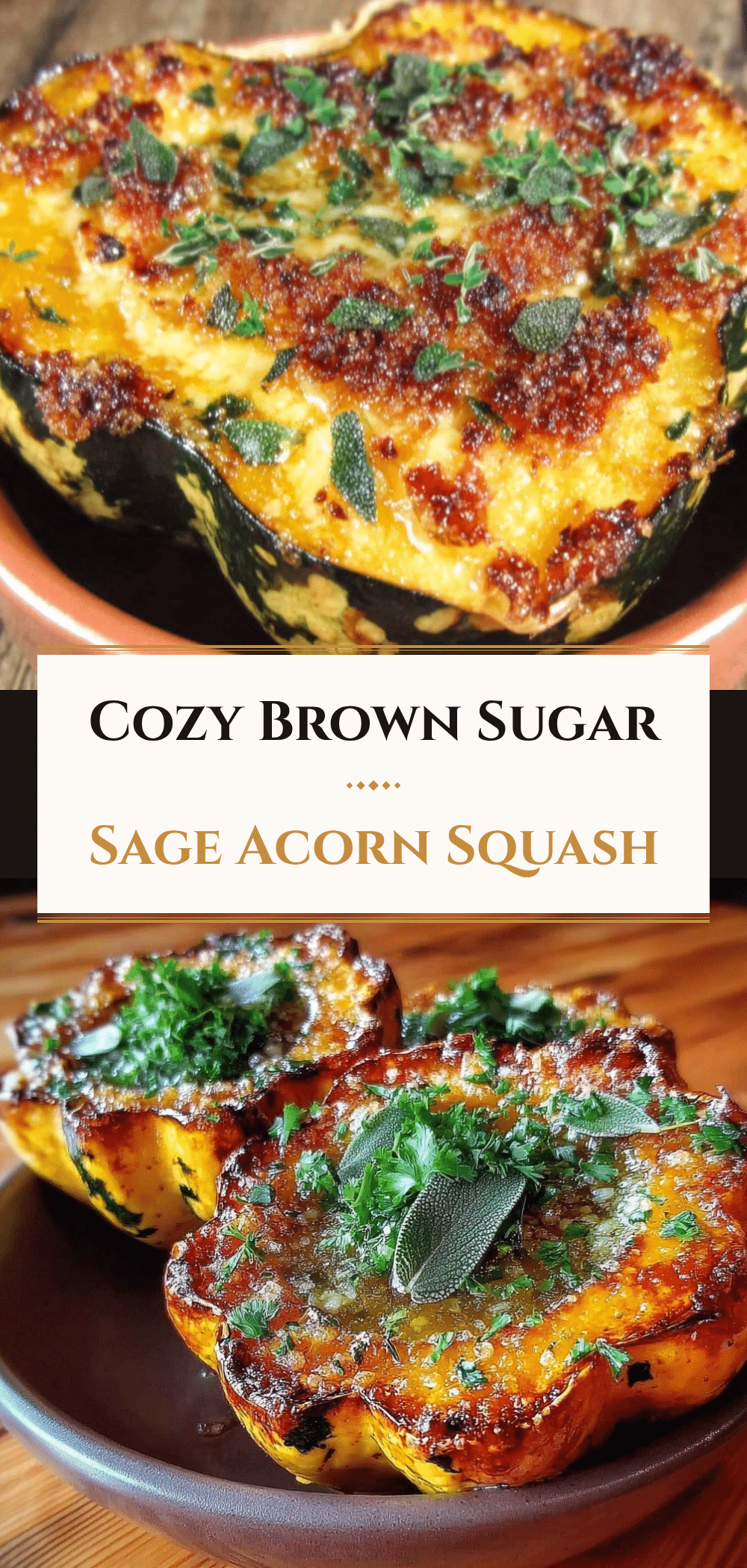
Autumn Brown Sugar Roasted Acorn Squash with Sage Butter
- Total Time: 55-60 minutes
- Yield: 4 servings 1x
Description
A comforting, passive-cooking dinner featuring roasted acorn squash glazed with brown sugar and drizzled with fragrant sage butter. Perfect for self-care evenings when you need something warm, simple, and nourishing.
Ingredients
- 1 large acorn squash (about 2–3 pounds / 900g-1.3kg)
- 2 tablespoons coconut oil or olive oil
- 2 tablespoons brown sugar (light or dark)
- 1/2 teaspoon kosher salt
- 1/4 teaspoon black pepper
- 3 tablespoons unsalted butter
- 10–12 fresh sage leaves, chopped
- 1 small clove garlic, minced
- Pinch of red pepper flakes (optional)
Instructions
- Preheat oven to 400°F (200°C). Line a 13×18 inch rimmed baking sheet with parchment paper.
- Wash and dry the acorn squash. Cut it in half lengthwise using a sharp chef’s knife. Scoop out seeds and pulp with a spoon.
- Place squash halves cut-side up on the baking sheet. Drizzle with melted oil and spread evenly.
- Sprinkle each half with 1 tablespoon brown sugar, 1/4 teaspoon kosher salt, and 1/8 teaspoon black pepper. Press seasonings into the flesh.
- Roast for 35-40 minutes, flipping the squash halfway through to ensure even browning. Squash is done when tender when pierced with a fork.
- While squash roasts, melt butter in a small saucepan over medium-low heat. Add chopped sage and minced garlic. Cook for 1-2 minutes until fragrant and green, being careful not to burn.
- Remove squash from oven. Drizzle generously with sage butter, allowing it to soak into the crevices.
- Let rest for 2-3 minutes before serving immediately.
Notes
Use fresh sage for the best flavor; dried sage is too muted. Ensure the squash is heavy for its size when selecting. Do not burn the butter when making the sage butter. The squash can be prepped and stored in the fridge for up to 24 hours before roasting. Leftovers store in the fridge for up to 3 days but do not freeze well.
- Prep Time: 15 minutes
- Cook Time: 40 minutes
- Category: Side Dish
- Cuisine: American
Nutrition
- Serving Size: 1 half squash per se
- Calories: 180
- Sugar: 18
- Sodium: 350
- Fat: 8
- Saturated Fat: 5
- Carbohydrates: 28
- Fiber: 6
- Protein: 2
Keywords: acorn squash, roasted squash, sage butter, brown sugar, fall recipes, self-care dinner, vegetarian side dish, gluten-free, easy dinner, comfort food