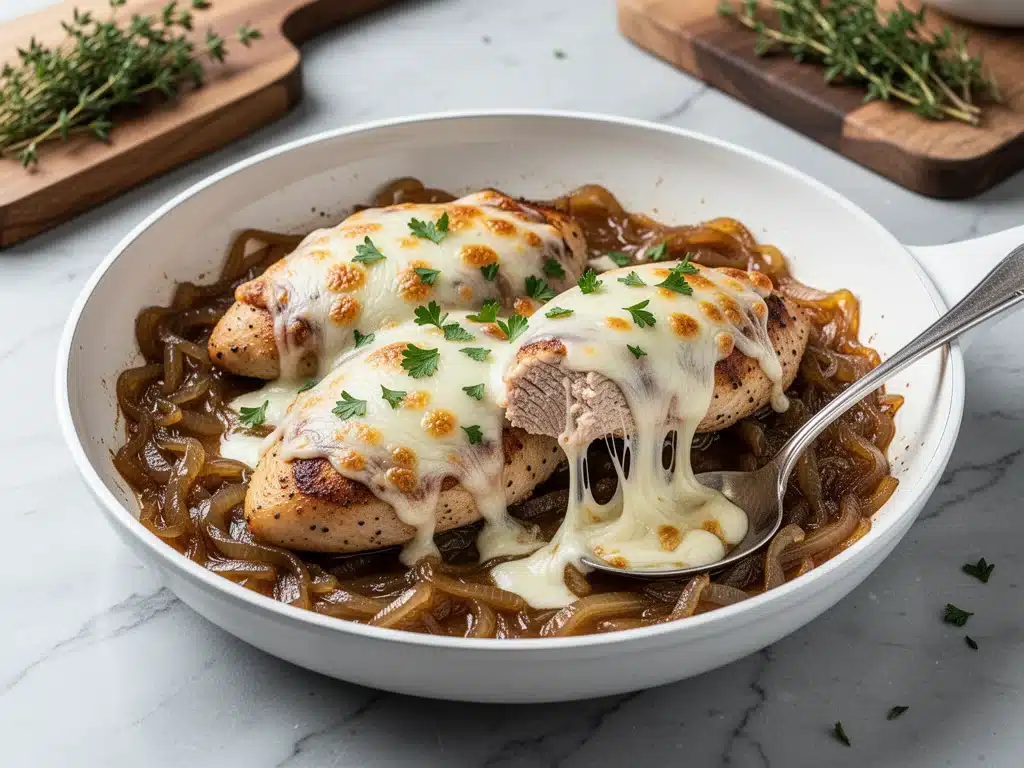
There is a specific kind of magic that happens when caramelized onions meet chicken thighs in a single skillet. I discovered this last November, standing in my kitchen at 6:45 PM, staring into the abyss of a nearly empty fridge. The kids were already complaining about being hungry, my husband was about to walk in the door, and the last thing I wanted was to heat up the oven for a casserole or order takeout for the third night in a row. I had some chicken thighs, a bag of yellow onions, and a jar of beef broth. I threw them together with a handful of thyme and some cheese, expecting a mediocre compromise.
Twenty minutes later, my husband walked in, sniffed the air, and said, “Did you stop by that French bistro on your way home?” No, he hadn’t. I had just made one-skillet French onion chicken on a whim. It was sweet, savory, tender, and required exactly one pan to clean. That night, one-skillet French onion chicken went from a “hail mary” dinner to a permanent fixture in our weekly rotation.
If you’ve ever felt like you’re spending more time cooking than eating, or if you’re tired of complicated recipes that require a dozen ingredients and three different pots, this is the recipe for you. It’s the kind of meal that feels fancy enough for company but easy enough for a Tuesday when you’re exhausted. I’ve made this one-skillet French onion chicken at least twenty times since that November night, tweaking it until I knew exactly how to get those onions perfectly sweet without burning my house down. And the best part? You probably have most of these ingredients right now.
Why You’ll Love This One-Skillet French Onion Chicken
I don’t say this lightly, but this recipe has saved our weeknight dinners more times than I can count. There are plenty of reasons to add this to your menu, but here’s the real talk on why it works so well in a busy household.
One Pan, Zero Stress — Seriously, one skillet. That’s it. No baking dish, no side pots for rice or vegetables, no dirty colander. When dinner is done, you just throw the pan in the sink (or let it soak while you relax). I’ve made one-pan creamy garlic tuscan salmon before, and while that’s great, this chicken version is even faster and uses ingredients I always have on hand. The cleanup is almost as fast as the cooking.
Restaurant-Quality Flavor — You know those deep, rich, sweet flavors you get from a French onion soup? We’re bringing that into the chicken. The secret is patience with the onions. Once you get them golden brown, the whole house smells incredible, and the flavor is complex in a way that feels like you spent hours on it. It’s the kind of meal that makes people ask, “How did you make this taste so good?”
Tender, Juicy Chicken — Boneless, skinless chicken breasts can dry out in a skillet if you’re not careful. But with chicken thighs? They stay juicy and flavorful even if you let them simmer a bit in the sauce. I prefer thighs for this because they hold up better to the braising process. Plus, they’re cheaper. This is budget-friendly luxury.
Gluten-Free Friendly — If you’re avoiding gluten, this is a dream. As long as you use a gluten-free beef broth and check your cheese, this one-skillet French onion chicken is naturally gluten-free. No flour dredging, no breadcrumbs. Just pure, simple flavors.
Makes Amazing Leftovers — This tastes even better the next day. The onions continue to meld with the sauce, and the chicken absorbs all that goodness. I deliberately make extra so I can have this for lunch. It reheats beautifully in the microwave or on the stovetop.
This is my go-to when I need dinner to just work. No complicated techniques, no weird ingredients, just reliable, delicious food that makes everyone happy. It’s the kind of meal that reminds you why you like cooking, even on the hard days.
Ingredients You’ll Need
Here’s the best part: you probably have most of this already. This isn’t a recipe that requires a special trip to the store for obscure items. It’s built on pantry staples and fresh basics. I’m particular about a few things here, so pay attention to the notes below.
Chicken Thighs (1.5 lbs / 680g) — Boneless, skinless chicken thighs are my preference. They stay juicy and don’t overcook as easily as breasts. If you must use breasts, pound them to an even thickness so they cook uniformly. I buy mine from the local butcher when possible, but grocery store brands work fine.
Yellow Onions (3 large, sliced / about 900g) — You’ll need a lot of onions. Don’t skimp. Sweet onions like Vidalia or Walla Walla work great if you can find them, especially in the spring and summer. Yellow onions are your reliable workhorse year-round. Slice them into half-moons, about ¼-inch thick.
Butter (2 tablespoons / 30g) — For sautéing the onions. Butter gives that rich, classic French onion flavor. I use unsalted so I can control the saltiness.
Olive Oil (1 tablespoon / 15ml) — I use a mix of butter and oil to prevent the butter from burning while the onions cook down. This is a pro tip that saves you from angry, burnt bits.
Garlic (4 cloves, minced / about 2 tablespoons) — Fresh garlic only. No jarred stuff here. The flavor difference is night and day in a delicate sauce like this. Mince it finely so it disperses evenly.
Beef Broth (1 cup / 240ml) — Low-sodium is key here because you’ll be adding salt later. If you don’t eat beef, vegetable broth works, but the flavor will be lighter. I use Swanson or Kitchen Basic, but any good quality low-sodium broth is fine.
Thyme (1 teaspoon dried / or 1 tablespoon fresh) — Dried thyme holds up better to simmering. If you have fresh, add it at the very end so it doesn’t turn to mush. Thyme and onions are a classic pairing for a reason.
Worcestershire Sauce (1 teaspoon) — This is the secret weapon. It adds that deep, umami richness that mimics the beef broth in French onion soup. Just a teaspoon makes a huge difference.
Swiss Cheese (1 cup / 100g, shredded) — Traditional French onion soup uses Gruyère, but Swiss is easier to find and melts beautifully. If you can find Gruyère, by all means, use it. It has that nutty, complex flavor that takes this to the next level. Shred it yourself—pre-shredded cheese has anti-caking agents that make the sauce grainy.
Salt and Black Pepper — To taste. Always season in layers, not just at the end.
Optional Garnish: Fresh parsley or chives for a pop of color and freshness.
Equipment Needed
You don’t need fancy equipment for this. Here’s what I actually use.
Large Skillet or Dutch Oven — I use a 12-inch cast-iron skillet. It holds heat well and goes from stovetop to oven if you want to melt the cheese under the broiler. If you don’t have a large skillet, a deep Dutch oven works too. Just make sure it’s big enough to fit the chicken and onions without crowding.
Sharp Chef’s Knife — For slicing the onions. A dull knife makes slicing onions painful and dangerous. I use my Wüsthof, but any sharp knife will do.
Wooden Spoon — For stirring the onions and chicken. Silicone works too. Don’t use metal on cast iron if you’re trying to preserve the seasoning, though it’s fine on stainless steel.
Cutting Board — Any size works. I use a large plastic one for easy cleanup.
Measuring Spoons and Cups — Standard stuff. Dollar store versions work fine for this.
Optional but Nice: Paper Towels — To pat the chicken dry. This step is crucial for getting a good sear.
How to Make It: Step-by-Step
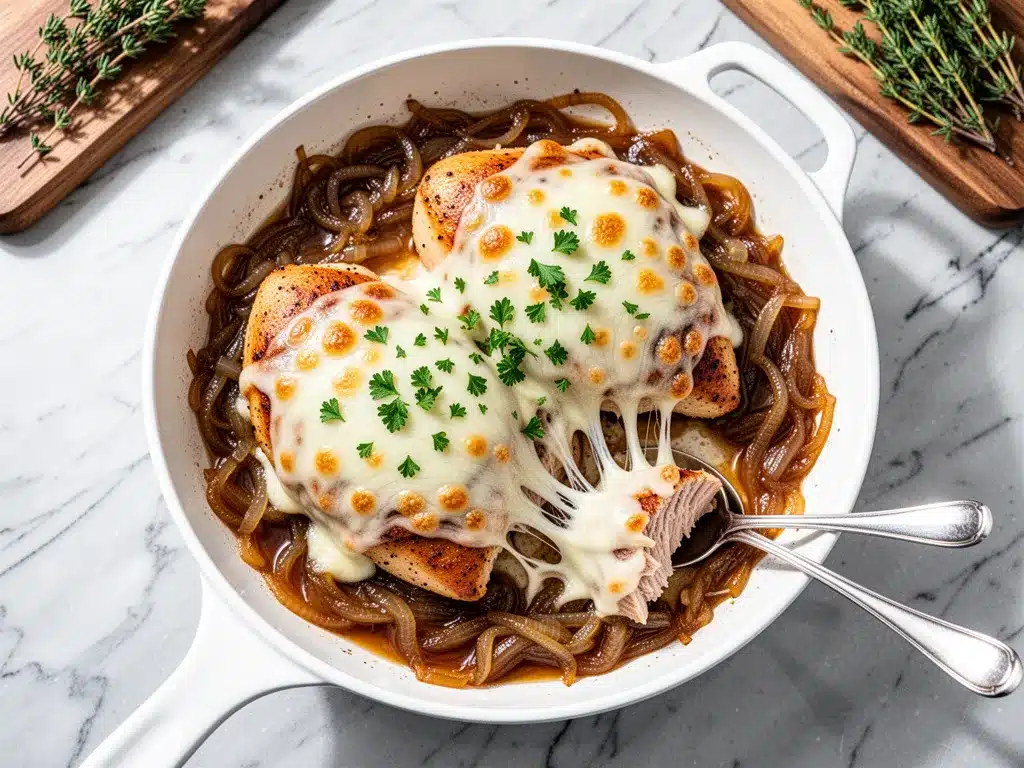
Alright, let’s make this! I’m walking you through exactly how I do it, including the little tricks I’ve picked up over the years.
Step 1: Prep the Chicken and Onions (10 minutes)
Pat the chicken thighs dry with paper towels. This sounds minor, but removing surface moisture is the #1 way to get a good sear. Season both sides generously with salt and pepper. Slice the onions into half-moons. If you’re worried about crying, chill the onions in the fridge for 15 minutes first. I know, it’s a hassle, but it helps. Set everything aside.
Step 2: Sear the Chicken (5-7 minutes)
Heat the olive oil in your large skillet over medium-high heat. Once the oil is shimmering, add the chicken thighs. Don’t crowd the pan—do this in batches if necessary. Sear for 3-4 minutes per side until golden brown. You don’t need to cook them through yet; you’re just building flavor. Remove the chicken to a plate and set aside. Leave the browned bits (fond) in the pan—that’s pure flavor gold.
Step 3: Cook the Onions (15-20 minutes)
Reduce the heat to medium-low. Add the butter to the same skillet. Once melted, add the onions. This is the most important step. Cook the onions slowly, stirring every few minutes. They should sweat and soften first, then slowly turn golden brown. This takes about 15-20 minutes. Don’t rush it! If they start to burn, lower the heat. You want them sweet and caramelized, not black. If they’re sticking too much, add a splash of water or broth to deglaze.
Step 4: Build the Sauce (3 minutes)
Once the onions are golden, add the minced garlic and dried thyme. Cook for 1 minute, stirring constantly, until fragrant. Be careful not to burn the garlic—it turns bitter instantly. Pour in the beef broth and Worcestershire sauce. Scrape up any browned bits from the bottom of the pan. Let it simmer for 2 minutes to reduce slightly.
Step 5: Simmer the Chicken (10-12 minutes)
Return the chicken thighs to the skillet, nestling them into the onions and sauce. Spoon some of the onion mixture over the top of the chicken. Cover the skillet with a lid. Let it simmer on medium-low heat for 10-12 minutes, or until the chicken is cooked through (internal temperature of 165°F / 74°C). The sauce will thicken as it cooks.
Step 6: Melt the Cheese (2 minutes)
Remove the lid. Sprinkle the shredded Swiss cheese evenly over the chicken and onions. You can either cover the pan again for a minute to let the steam melt the cheese, or put the skillet under the broiler for 1-2 minutes until the cheese is bubbly and slightly browned. I prefer the broiler for that nice color.
Step 7: Serve
Remove from heat. Garnish with fresh parsley or chives if you have them. Serve immediately, spooning extra onions and sauce over the top. This one-skillet French onion chicken is best eaten straight from the pan.
Expert Tips & Tricks
Here’s everything I’ve learned from making this dozens of times. These tips will save you from my mistakes.
Pat the Chicken Dry
I can’t stress this enough. Wet chicken steams instead of sears. If you skip this step, you’ll get gray, boiled-looking chicken instead of golden, flavorful meat. Use paper towels and press firmly.
Low and Slow with Onions
Caramelizing onions is a patience test. If you crank the heat, you’ll burn them before they sweeten. Medium-low heat is your friend. If you’re short on time, you can add a pinch of sugar to help them brown faster, but I prefer the natural sweetness that comes from slow cooking.
Don’t Skip the Deglaze
When you add the broth after cooking the onions, use a wooden spoon to scrape up all those browned bits from the bottom of the pan. Those bits are packed with flavor and will enrich your sauce. It’s the difference between good and great.
Use Good Cheese
Pre-shredded cheese is convenient but terrible for melting. It’s coated in cellulose to prevent clumping, which makes the sauce gritty. Buy a block of Swiss or Gruyère and shred it yourself. It takes 3 minutes and makes a huge difference in texture.
Check the Temperature
Chicken thighs are forgiving, but you don’t want them raw or dry. Use a meat thermometer if you have one. 165°F is the target. If you don’t have one, cut into the thickest part—the juices should run clear, not pink.
Common Mistakes (and how to avoid them)
- Mistake: Chicken is dry. Fix: You cooked it too long or used breasts instead of thighs. If using breasts, pound them to an even ½-inch thickness and cook for only 5-6 minutes per side.
- Mistake: Sauce is too thin. Fix: Simmer uncovered for a few more minutes. The sauce should coat the back of a spoon.
- Mistake: Onions are burnt. Fix: Lower the heat immediately. Add a splash of water to stop the cooking. Next time, be more patient.
Variations & Substitutions
Once you’ve nailed the basic version, here’s how you can mix it up. I’ve tried all of these.
Chicken Breast Version
If you prefer white meat, use boneless, skinless chicken breasts. Pound them to an even thickness so they cook evenly. Reduce the simmering time to 8-10 minutes to prevent drying out. I usually serve this with cheesy baked chicken parmesan sliders when I want something similar but with a breadcrumb crust.
White Wine Version
Swap half the beef broth for dry white wine (like Sauvignon Blanc or Pinot Grigio). Add it with the broth and let it reduce completely before adding the chicken. This adds a brighter, more acidic flavor profile.
Mustard Kick
Add 1 tablespoon of Dijon mustard when you add the broth. It adds a tangy depth that pairs beautifully with the sweet onions. This is my favorite variation when I want something a bit more bold.
Cheese Swap
Gruyère is traditional, but you can use provolone, mozzarella, or even cheddar if that’s what you have. Gruyère has that nutty flavor that mimics French onion soup, but provolone is a great melty alternative.
Gluten-Free
This recipe is naturally gluten-free as written. Just ensure your beef broth and Worcestershire sauce are certified gluten-free. Some brands hide wheat in their sauces.
Vegan Version
Swap chicken for thick-cut portobello mushrooms or seitan. Use vegetable broth and vegan butter. Top with vegan Swiss-style cheese shreds. It’s not the same, but it’s still delicious.
Serving & Storage
How to Serve:
I usually serve this straight from the skillet at the dinner table—it looks rustic and stays warm. But here are other ways I’ve enjoyed it:
- Over Mashed Potatoes: Spoon the onion sauce over creamy mashed potatoes. It’s like a deconstructed shepherd’s pie.
- With Rice: Serve over fluffy white rice or buttered egg noodles to soak up the sauce.
- With Crusty Bread: A baguette is perfect for mopping up every last bit of sauce.
- With Roasted Vegetables: Simple roasted broccoli or green beans on the side balance the richness.
Storage Instructions:
Refrigerator: Store leftovers in an airtight container for up to 4 days. The sauce will thicken in the fridge—totally normal.
Reheating: Best method: Add to a skillet with a splash of broth or water over low heat. Stir until heated through and creamy again. Microwave method: Heat in 30-second intervals, stirring between. Add a splash of liquid if it’s too thick. Never works: Trying to reheat in the pot you cooked it in. It always burns on the bottom. Ask me how I know.
Freezing: Honestly, this doesn’t freeze well because of the dairy. The sauce separates when thawed. Make it fresh or store in the fridge for up to 4 days.
Nutrition Information
I’m not a nutritionist, but here’s the breakdown if you’re tracking.
Per Serving (based on 4 servings):
- Calories: 480
- Protein: 35g
- Carbs: 18g
- Fiber: 3g
- Sugar: 10g (from onions)
- Fat: 28g
- Saturated Fat: 12g
- Cholesterol: 120mg
- Sodium: 650mg
What’s Good: High protein from the chicken, decent fiber from the onions, and no added sugar (the sweetness comes naturally from the caramelized onions).
What to Know: Higher in calories from the cheese and butter. Contains dairy. Moderate sodium (use low-sodium broth to reduce).
My Take: Look, this is comfort food with cheese and onions. It’s not a diet recipe. But it’s way better than takeout, costs less, and I know exactly what’s in it. When I want to make it lighter, I use less cheese and more onions. But usually? I just eat a reasonable portion and enjoy it.
Final Thoughts
So that’s my go-to one-skillet French onion chicken! I’ve probably talked your ear off at this point, but when you make a recipe this often, you have a lot to say about it.
This has saved weeknight dinners more times than I can count. It’s my answer to “what’s for dinner” when I’m tired, don’t want takeout, and still want something that tastes really good. My kids are happy, my husband’s happy, and I’m happy because I’m not stressed about cooking. It’s the kind of meal that feels like a hug on a plate.
Make it yours! Try different cheeses, add some mushrooms, or swap in white wine. The best recipes are the ones you adapt to your family’s tastes. If you make this, drop a comment and let me know what you think! I love hearing how recipes turn out in your kitchen. And if something doesn’t work, tell me that too—I’m here to help troubleshoot.
Happy cooking! And I hope your kitchen smells half as good as mine does right now.
Frequently Asked Questions
Can I use chicken breasts instead of thighs?
Yes, but they cook faster and can dry out. If you use breasts, pound them to an even ½-inch thickness and reduce the simmering time to 8-10 minutes. Check the temperature frequently—165°F is the target. I still prefer thighs for this recipe because they stay juicier in the sauce.
How do I get the onions to caramelize faster?
You can’t rush it too much, but adding a pinch of sugar can help. Also, make sure your pan isn’t too crowded. If you’re cooking for a large group, do the onions in batches. Low and slow is the key to sweetness without burning.
Can I make this ahead for a dinner party?
Sort of. You can prep the onions and sear the chicken ahead of time. Store them separately in the fridge. When ready to serve, finish the sauce and simmer the chicken as directed. It saves about 20 minutes of active cooking time, which is nice when you’re hosting.
Why did my sauce turn out watery?
Usually means you didn’t simmer it long enough after adding the broth, or you added too much liquid. Let the sauce reduce until it coats the back of a spoon. If it’s still too thin, simmer uncovered for a few more minutes.
Can I use vegetable broth instead of beef broth?
Yes, but the flavor will be lighter. Beef broth adds that rich, deep umami that mimics French onion soup. If you use vegetable broth, consider adding a teaspoon of soy sauce or mushroom powder to boost the savory flavor.
How do I reheat leftovers without it getting dry?
Add a splash of broth or water to a skillet, add your leftover chicken, and heat gently over low heat, stirring frequently. The extra liquid brings back the creamy texture. Microwave sort of works but tends to dry it out. If you do microwave, definitely add a splash of liquid first and heat in short bursts, stirring between.
Can I freeze this recipe?
I don’t recommend it. The dairy-based sauce can separate and become grainy when frozen and thawed. It’s best made fresh. If you have leftovers, store them in the fridge for up to 4 days.
Pin This Recipe!


One-Skillet French Onion Chicken
- Total Time: 45 minutes
- Yield: 4 servings 1x
Description
A quick and easy weeknight dinner featuring caramelized onions, tender chicken thighs, and melted Swiss cheese cooked in a single skillet for minimal cleanup.
Ingredients
- 1.5 lbs boneless, skinless chicken thighs
- 3 large yellow onions, sliced into half-moons
- 2 tablespoons unsalted butter
- 1 tablespoon olive oil
- 4 cloves garlic, minced
- 1 cup low-sodium beef broth
- 1 teaspoon dried thyme (or 1 tablespoon fresh)
- 1 teaspoon Worcestershire sauce
- 1 cup shredded Swiss cheese (or Gruyère)
- Salt and black pepper to taste
- Fresh parsley or chives for garnish (optional)
Instructions
- Pat chicken thighs dry with paper towels and season generously with salt and pepper.
- Slice onions into ¼-inch thick half-moons.
- Heat olive oil in a large skillet over medium-high heat. Sear chicken thighs for 3-4 minutes per side until golden brown. Remove chicken to a plate and set aside.
- Reduce heat to medium-low. Add butter to the skillet. Once melted, add onions and cook slowly for 15-20 minutes, stirring occasionally, until deeply caramelized and golden brown.
- Add minced garlic and dried thyme to the onions; cook for 1 minute until fragrant.
- Pour in beef broth and Worcestershire sauce, scraping up browned bits from the bottom of the pan. Simmer for 2 minutes.
- Return chicken to the skillet, nestling it into the onions. Spoon sauce over the chicken. Cover and simmer on medium-low for 10-12 minutes until chicken reaches an internal temperature of 165°F.
- Remove lid and sprinkle shredded cheese over the chicken and onions. Cover for 1 minute or broil for 1-2 minutes until cheese is bubbly and browned.
- Garnish with fresh parsley or chives and serve immediately.
Notes
Patting the chicken dry is crucial for a good sear. Cook onions low and slow to caramelize them without burning. Use fresh shredded cheese rather than pre-shredded to avoid anti-caking agents that make the sauce grainy. This recipe is naturally gluten-free if using certified gluten-free broth and Worcestershire sauce.
- Prep Time: 10 minutes
- Cook Time: 35 minutes
- Category: Main Course
- Cuisine: American
Nutrition
- Serving Size: 1 chicken thigh with
- Calories: 480
- Sugar: 10
- Sodium: 650
- Fat: 28
- Saturated Fat: 12
- Carbohydrates: 18
- Fiber: 3
- Protein: 35
Keywords: one-skillet dinner, french onion chicken, weeknight dinner, easy chicken recipe, gluten-free dinner, one pan meal, caramelized onions, chicken thighs