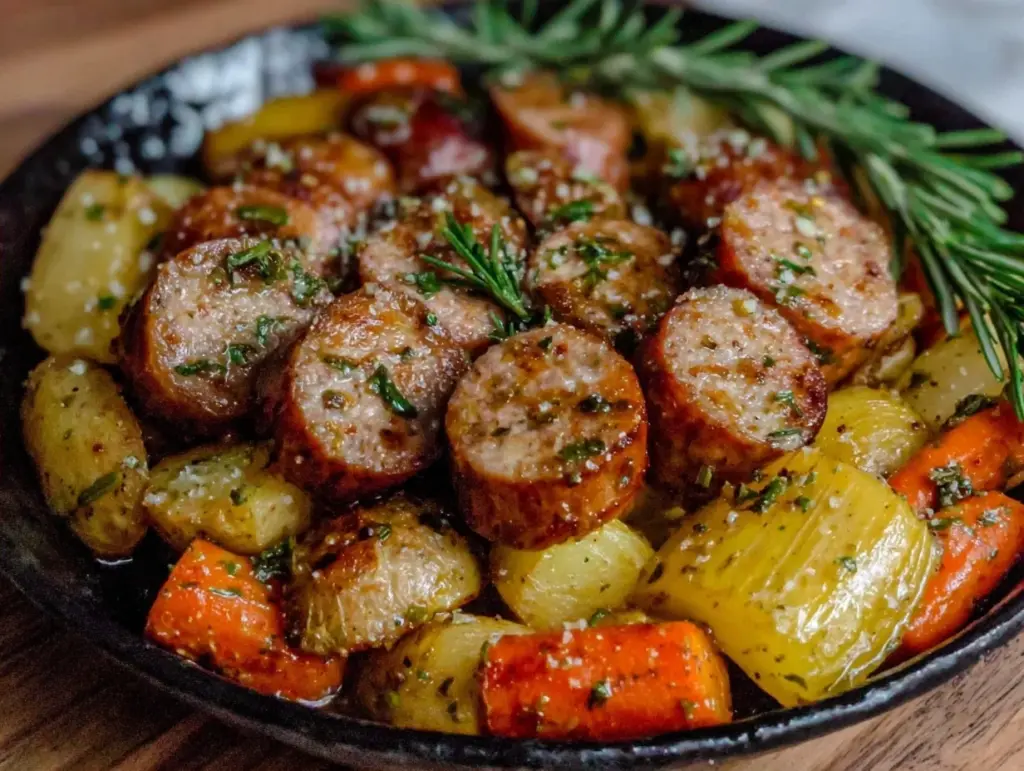
The first time I saw frost on the pumpkin patches down the road, I knew it was time to pull out the heavy cast iron. Well, maybe not cast iron—my grandmother used a massive, dented aluminum sheet pan that had seen more decades than I had seen years. That pan lived in the back of her pantry in rural Ohio, covered in a thin layer of flour and memories. It wasn’t fancy. It didn’t have non-stick coating that flaked off after two years. It was just a tool for making dinner work when the wind started biting and the garden went dormant.
My grandmother didn’t believe in rushing dinner. She believed in letting things roast until they surrendered. Her version of this fall sheet pan sausage and root vegetables with rosemary wasn’t about speed. It was about the smell. You’d walk into her kitchen around 5:30 PM, and the air would be thick with the scent of browned sausage, earthy potatoes, and that sharp, pine-like aroma of fresh rosemary. It was the kind of smell that made you hungry before you even sat down. It was the smell of safety. Of home. Of being loved.
I’ve tried to replicate that exact feeling for years. I’ve bought fancy stainless steel pans. I’ve tried air fryers. I’ve even tried the “healthy” way with zucchini noodles (which, let’s be honest, is just sad). But nothing—nothing—beats the original method. The one where you chop the veggies, toss them in oil and herbs, throw them on a single pan, and walk away. No babysitting. No stirring. Just time and heat doing the work.
This fall sheet pan sausage and root vegetables with rosemary is my tribute to that old aluminum pan. It’s the recipe I make when the leaves turn brown and the days get shorter. It’s hearty, it’s rustic, and it tastes like a hug. I’ve tested this version so many times that I can probably make it with my eyes closed, but I still write it down every time I cook it. Because some things are too important to forget. And because I want to make sure you get it right the first time, just like she did.
Why You’ll Love This Recipe
There’s a reason this dish has been on my table every October for the last fifteen years. It’s not just because it tastes good (though it does, deeply). It’s because it takes the stress out of weeknight cooking. Here’s the thing about autumn: it’s a busy time. School runs, football games, changing schedules. You don’t have energy for complicated techniques or thirty-step recipes.
One Pan, Zero Fuss — Seriously, this is the ultimate low-effort dinner. You chop, you toss, you bake. That’s it. No sautéing, no simmering sauces, no standing over the stove. I’ve made this on nights when I was exhausted, running on three hours of sleep, and it still came out restaurant-quality. The cleanup is just one pan. One. My husband still looks at me like I’m a wizard when I hand him that single dish to wash.
Flavor That Deepens — Unlike stir-fries that lose their crunch, this dish actually gets better as it sits. The sugars in the carrots and parsnips caramelize. The sausage releases its spices into the vegetables. The rosemary infuses everything. If you let it rest for ten minutes after pulling it from the oven, the flavors marry in a way that’s just magical. It’s not just cooked food; it’s transformed food.
Perfect for Company — I’ve served this to my parents, my in-laws, and even my picky vegetarian friend (who happily eats the veggies and cheese if you leave out the meat). It looks rustic and intentional, like you spent hours in the kitchen, when really you just set a timer and read a book. It impresses without intimidating. It’s the kind of meal that makes people stay at the table longer, talking and drinking wine while the food disappears.
Budget-Friendly Comfort — Root vegetables are cheap in the fall. Sausage is affordable if you buy the right kind (more on that later). You’re feeding four people for under $20, and it feels like a feast. It’s hearty enough to be a main course but simple enough to not break the bank. It’s the kind of meal that reminds you that good food doesn’t have to be expensive.
This is my go-to when I need dinner to just work. No complicated techniques, no weird ingredients, just reliable, delicious food that makes everyone happy. It’s the way my grandmother made it, and it’s the way I’ll keep making it.
Ingredients You’ll Need
Here’s the best part: you probably have most of this already. This isn’t a recipe that requires a special trip to a specialty store. It’s built on pantry staples and seasonal produce. I’m particular about a few things here, and I’ll tell you exactly why.
For the Base:
Olive oil (3 tablespoons / 45ml) — Use good quality extra virgin here. It’s the primary fat, so it needs to taste good. I keep a bottle specifically for roasting. If your oil tastes bitter or flat, your veggies will too.
Root Vegetables (2 pounds total / 900g) — This is where you get creative. I use a mix of Yukon Gold potatoes (cubed), carrots (halved lengthwise), and parsnips (cubed). Yukon Golds hold their shape better than Russets, which can turn to mush. Carrots and parsnips add that natural sweetness that balances the savory sausage. You can add beets if you like, but they bleed color, so be careful.
Fresh Rosemary (2 tablespoons, chopped / 10g) — Do not use dried rosemary if you can help it. Fresh is non-negotiable for this dish. The oils in the fresh needles are what give it that aromatic punch. Strip the needles from the woody stems and chop them roughly. If you don’t have fresh, you can use 2 teaspoons dried, but the flavor will be quieter.
For the Protein:
Italian Sausage (1.5 pounds / 680g) — I use mild Italian sausage links, removed from the casing. You can use hot if you like a kick, but mild lets the vegetables shine. Look for sausage with fennel seeds—it adds that classic savory depth. If you can’t find links, bulk sausage works too, just break it up into small chunks.
For the Finish:
Parmesan Cheese (½ cup / 50g, grated) — Freshly grated from a block. Pre-grated has anti-caking agents that prevent it from melting properly. You want it to get crispy and golden on the veggies, not clumpy. A little goes a long way.
Garlic (4 cloves, minced / 12g) — Fresh only. Jarred garlic has a metallic taste that clashes with the rosemary. Mince it fine so it distributes evenly.
Salt and Black Pepper — Kosher salt is best for seasoning veggies. Use coarse black pepper for texture. I always taste as I go.
Optional Add-ins:
Red Bell Pepper (1, chopped) — Adds a pop of color and sweetness. I throw this in whenever I have it. It softens nicely and contrasts with the root veggies.
Red Pepper Flakes (½ teaspoon) — If you like a little heat, sprinkle this on before baking. It cuts through the richness of the sausage and cheese.
Red Wine Vinegar (1 tablespoon) — Drizzle this over the finished dish before serving. It brightens everything up and cuts the heaviness. My grandmother always did this, and I never understood why until I tried it. Now I can’t imagine it without it.
Equipment Needed
You don’t need fancy equipment for this. Here’s what I actually use.
Large Sheet Pan — I use a half-sheet pan (18×13 inches). If you have a smaller quarter-sheet pan, you’ll need to use two pans so the veggies aren’t crowded. Crowding is the enemy of roasting. If the veggies are touching too much, they steam instead of roast. I learned this the hard way with a soggy disaster in my twenties.
Rimmed Baking Sheet — Essential. You don’t want oil and juices running onto your oven floor. Any rimmed sheet pan works. I use a dark metal one because it promotes browning, but light aluminum is fine too.
Chef’s Knife — For chopping the vegetables. Sharp is better. Dull knives slip and hurt. I keep my knife sharpened monthly.
Large Mixing Bowl — To toss the veggies in oil and herbs. Any big bowl works. I use a stainless steel one because it’s easy to clean.
Pastry Brush — Optional, but nice for brushing the sausage with a little oil before adding it to the pan.
Oven — Preheated to 400°F (200°C). Make sure your oven is actually at temperature. I use an oven thermometer because built-in dials are often off by 25 degrees.
Wooden Spoon — For stirring the sausage as it browns.
How to Make It: Step-by-Step
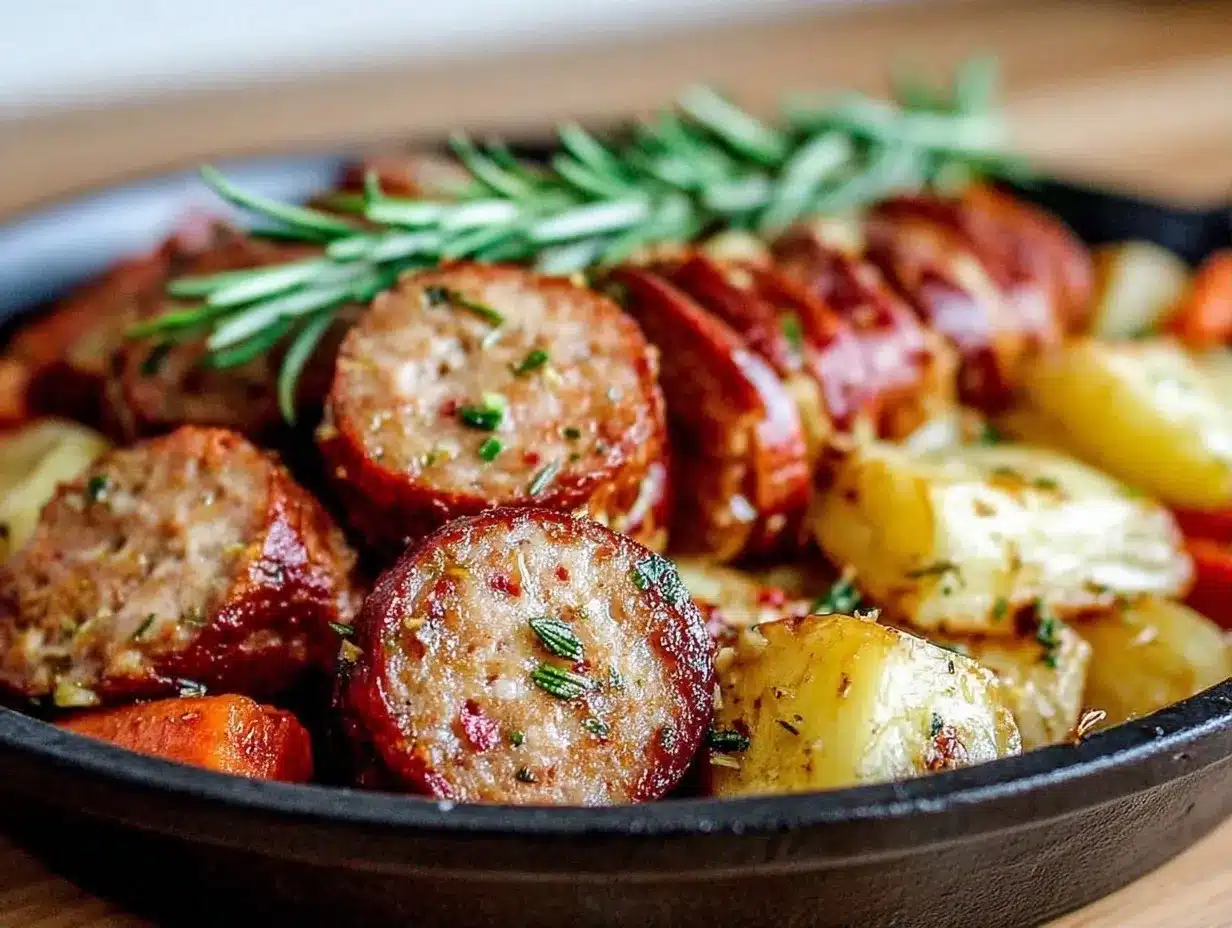
Alright, let’s make this! I’m walking you through exactly how I do it, including the little tricks I’ve picked up over the years.
Step 1: Prep Your Oven and Pan (5 minutes)
Preheat your oven to 400°F (200°C). This needs to be hot enough to caramelize the sugars in the vegetables but not so hot that the rosemary burns. Line your sheet pan with parchment paper for easy cleanup, or lightly grease it with olive oil if you prefer that crispier bottom. I use parchment because I’m lazy, but greasing it directly gives a better sear.
Step 2: Chop the Vegetables (10 minutes)
Wash and peel your potatoes, carrots, and parsnips. Cut them into uniform pieces. This is crucial. If your potato cubes are 2 inches and your carrot sticks are 1 inch, the carrots will turn to mush before the potatoes are cooked. Aim for 1-inch chunks for everything. It doesn’t need to be perfect, but consistency helps. Toss them into your large mixing bowl.
Step 3: Season and Oil the Veggies (2 minutes)
Drizzle 2 tablespoons of olive oil over the vegetables. Sprinkle with 1 teaspoon of salt and ½ teaspoon of black pepper. Add half of your chopped rosemary. Toss everything with your hands until every piece is coated. You want them glistening, not swimming in oil. This ensures even browning.
Step 4: Roast the Vegetables (20 minutes)
Spread the vegetables in a single layer on the sheet pan. Do not overcrowd. If they’re piled on top of each other, they’ll steam. Put them in the oven and roast for 20 minutes. This partial cook tenderizes the dense root vegetables so they’re ready for the sausage.
Step 5: Brown the Sausage (10 minutes)
While the veggies roast, heat the remaining 1 tablespoon of olive oil in a large skillet over medium-high heat. Remove the sausage from its casing and break it into small, bite-sized chunks. Add it to the skillet. Cook for 8-10 minutes, stirring occasionally, until browned and cooked through. Drain any excess fat if there’s a lot. You want flavorful browned bits, not greasy sausage.
Step 6: Combine and Finish (15 minutes)
Remove the pan from the oven. Push the vegetables to the sides to make room in the center. Add the browned sausage to the pan. Sprinkle the remaining rosemary and minced garlic over everything. Toss gently to combine. Return to the oven for 15 minutes. This final roast allows the sausage to render its fat into the veggies and for the garlic to toast without burning.
Step 7: Add Cheese and Rest (5 minutes)
Pull the pan from the oven. Sprinkle the grated Parmesan cheese evenly over the top. Let it sit in the pan for 5 minutes before serving. The residual heat will melt the cheese slightly and create a light crust. This resting time lets the flavors settle and makes it easier to serve.
Total Time: About 55 minutes (15 minutes active, 40 minutes hands-off)
Expert Tips & Tricks
Here’s everything I’ve learned from making this dozens of times. These tips will save you from my mistakes.
Uniform Cuts Are Key
I can’t stress this enough. If your vegetables are different sizes, some will burn while others are raw. Take the extra five minutes to cut them evenly. It makes a huge difference in the final texture.
Don’t Skip the Partial Roast
Some recipes say to throw everything in at once. I disagree. Root vegetables are dense. If you add the sausage at the start, the sausage will burn or dry out before the potatoes are tender. Roasting the veggies first ensures everything is perfectly cooked at the end.
Brown the Sausage Separately
Adding raw sausage to the pan with wet vegetables can lead to steaming rather than browning. Searing it in a skillet first gives you those delicious, crispy bits of meat that add texture to the dish. It’s worth the extra pan.
Use Fresh Rosemary
Dried rosemary is okay in soups, but for roasting, fresh is better. The heat releases the essential oils in the fresh needles, creating that aromatic scent. If you only have dried, use half the amount and add it at the very end so it doesn’t burn.
Common Mistakes (and how to avoid them):
Mistake: Soggy Vegetables
Fix: You crowded the pan. Use a larger pan or two pans. Space is essential for roasting.
Mistake: Burnt Garlic
Fix: Add the garlic in the last 5 minutes of cooking. Garlic burns quickly at 400°F. If you add it at the start, it’ll taste bitter.
Mistake: Dry Sausage
Fix: Don’t overcook it. Sausage cooks fast. Brown it, then add it to the pan to finish. It will stay juicy.
Variations & Substitutions
Once you’ve nailed the basic version, here’s how you can mix it up. I’ve tried all of these.
Spicy Kick
Swap mild Italian sausage for hot Italian sausage. Add 1 teaspoon of red pepper flakes with the garlic. This is my favorite version when I want something with a bit of fire.
Apple and Sage
Add 1 diced Granny Smith apple to the pan with the vegetables. Swap rosemary for fresh sage. The apple adds sweetness and tartness that pairs beautifully with the savory sausage. This is a classic fall combination.
Gluten-Free
This recipe is naturally gluten-free if you use gluten-free sausage. Check the label to make sure there’s no wheat filler. Everything else is naturally gluten-free.
Dairy-Free
Skip the Parmesan cheese. The dish is still flavorful from the sausage and herbs. You can add a drizzle of balsamic glaze at the end for depth.
Vegetarian Version
Skip the sausage and add 1 cup of chopped mushrooms. Sauté the mushrooms separately until browned, then add them to the pan with the veggies. They add a meaty texture that works well.
Different Proteins:
– Chicken thighs (boneless, skinless) — Season with salt and pepper, brown separately, then add to pan.
– Turkey sausage — Leaner option, but needs moisture. Add a splash of chicken broth to the pan.
Serving & Storage
How to Serve:
I usually serve this straight from the pan at the dinner table. It looks rustic and stays warm. But here are other ways I’ve enjoyed it:
Side Dishes:
– A simple arugula salad with lemon vinaigrette (the bitterness cuts the richness)
– Crusty bread for soaking up the juices
– Roasted green beans (if you want more greens)
Toppings Bar:
When I have guests, I put out: extra Parmesan, red pepper flakes, fresh parsley, and that red wine vinegar. Everyone customizes their bowl.
Storage Instructions:
Refrigerator:
Store in an airtight container for up to 4 days. The flavors actually get better after a day or two as they meld together.
Reheating:
Best method: Oven or toaster oven at 350°F for 10-15 minutes. This restores the crispiness. Microwave works but makes the veggies soft. If you microwave, add a splash of water to keep them moist.
Freezing:
Freezing is not recommended. The root vegetables can become mushy upon thawing, and the sausage may dry out. It’s best eaten fresh or refrigerated.
Nutrition Information
I’m not a nutritionist, but here’s the breakdown if you’re tracking.
Per Serving (based on 6 servings):
– Calories: 450
– Protein: 22g
– Carbs: 35g
– Fiber: 5g
– Sugar: 8g
– Fat: 25g
– Saturated Fat: 7g
– Cholesterol: 65mg
– Sodium: 680mg
– Calcium: 120mg
What’s Good:
– High in fiber from the root vegetables
– Good source of protein from the sausage
– Rich in vitamins A and C from the carrots and potatoes
What to Know:
– Higher in sodium due to the sausage
– Contains dairy (Parmesan)
– Moderate in calories, but very filling
Look, this is comfort food. It’s hearty and satisfying. It’s not a diet recipe, but it’s made with whole, real ingredients. When I want to make it lighter, I use turkey sausage and reduce the cheese. But usually? I just enjoy it in moderation.
Final Thoughts
So that’s my fall sheet pan sausage and root vegetables with rosemary! I’ve probably talked your ear off at this point, but when you make a recipe this often, you have a lot to say about it. It’s more than just dinner. It’s a ritual. It’s the sound of the knife on the cutting board, the smell of the rosemary, the warmth of the oven. It’s the way my grandmother made it, and it’s the way I’ll keep making it.
This has saved weeknight dinners more times than I can count. It’s my answer to “what’s for dinner” when I’m tired, don’t want takeout, and still want something that tastes really good. My kids are happy, my husband’s happy, and I’m happy because I’m not stressed about cooking.
Make it yours! Try different add-ins, swap in your favorite vegetables, adjust the garlic (though more is always better in my opinion). The best recipes are the ones you adapt to your family’s tastes.
If you make this, drop a comment and let me know what you think! I love hearing how recipes turn out in your kitchen. And if something doesn’t work, tell me that too—I’m here to help troubleshoot.
Happy cooking! And I hope your kitchen smells half as good as mine does right now.
Frequently Asked Questions
Q: Can I use sweet potatoes instead of regular potatoes?
A: Absolutely! Sweet potatoes work beautifully in this dish. They’re sweeter and softer, so they’ll caramelize nicely. Just make sure to cut them into similar-sized pieces so they cook evenly with the other veggies. I actually prefer sweet potatoes in the fall version.
Q: Why did my vegetables turn out soggy?
A: This usually happens when the pan is overcrowded. If the veggies are touching, they steam instead of roast. Use a larger pan or split the batch into two pans. Also, make sure your oven is preheated properly. A cold start leads to steaming.
Q: Can I make this ahead for a dinner party?
A: You can prep the vegetables and chop the sausage the night before. Store them separately in the fridge. When you’re ready to cook, just toss them in the pan and bake. It saves time on the day of, but the roasting should be done fresh for best texture.
Q: Can I use dried rosemary?
A: You can, but fresh is much better. Dried rosemary is potent and can become bitter if overcooked. If you must use dried, use 1 teaspoon for every 2 tablespoons of fresh. Add it at the very end of cooking to preserve the flavor.
Q: How do I reheat leftovers without them getting dry?
A: The oven is your friend. Reheat at 350°F for 10-15 minutes. This restores the crispiness. The microwave will make them soft and chewy, which isn’t bad, but it’s not the same experience. If you microwave, add a splash of water and cover it.
Q: Can I freeze this recipe?
A: I don’t recommend it. The root vegetables lose their texture when frozen and thawed. They can become mushy. It’s best eaten fresh or stored in the fridge for up to 4 days.
Q: What wine goes well with this?
A: A full-bodied red like Pinot Noir or a robust Chianti works well. The acidity in the wine cuts through the richness of the sausage and cheese. If you prefer white, a buttery Chardonnay is also a good match.
Pin This Recipe!
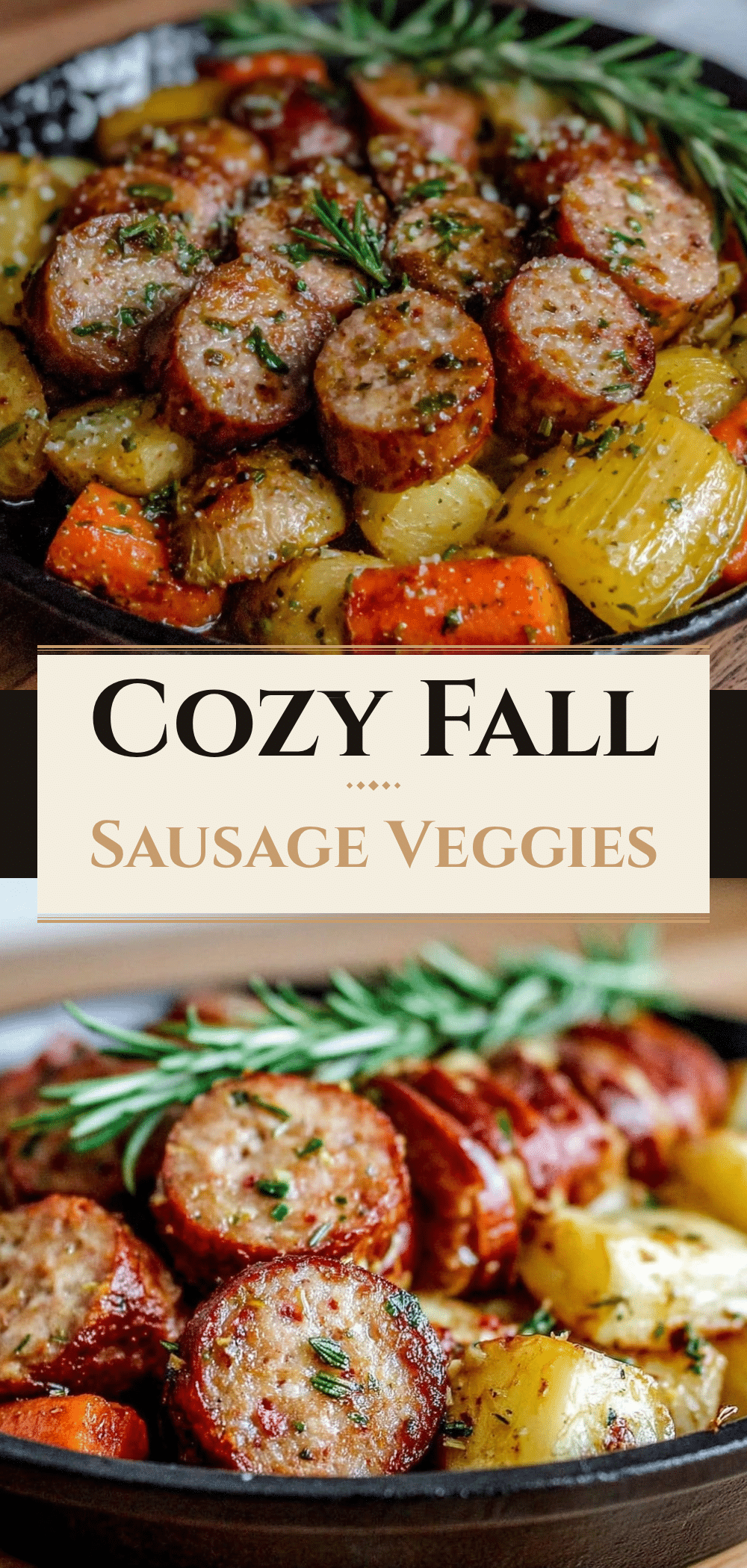

Fall Sheet Pan Sausage & Root Vegs: Grandma’s Recipe
- Total Time: 55 minutes
- Yield: 6 servings 1x
Description
A rustic, one-pan dinner featuring roasted root vegetables and Italian sausage with fresh rosemary, inspired by traditional family recipes. This low-effort meal delivers deep flavors and minimal cleanup.
Ingredients
- 3 tablespoons extra virgin olive oil
- 2 pounds root vegetables (Yukon Gold potatoes cubed, carrots halved, parsnips cubed)
- 2 tablespoons fresh rosemary, chopped
- 1.5 pounds mild Italian sausage, removed from casing
- ½ cup freshly grated Parmesan cheese
- 4 cloves garlic, minced
- 1 teaspoon kosher salt
- ½ teaspoon coarse black pepper
- Optional: 1 red bell pepper, chopped
- Optional: ½ teaspoon red pepper flakes
- Optional: 1 tablespoon red wine vinegar
Instructions
- Preheat oven to 400°F (200°C). Line a large rimmed baking sheet with parchment paper or grease lightly with olive oil.
- Wash, peel, and chop potatoes, carrots, and parsnips into uniform 1-inch chunks. Place in a large mixing bowl.
- Drizzle 2 tablespoons olive oil over the vegetables. Sprinkle with salt, pepper, and half of the chopped rosemary. Toss until evenly coated.
- Spread vegetables in a single layer on the baking sheet. Roast for 20 minutes to tenderize.
- While veggies roast, heat remaining 1 tablespoon olive oil in a large skillet over medium-high heat. Break sausage into bite-sized chunks and brown for 8-10 minutes, stirring occasionally. Drain excess fat if necessary.
- Remove the baking sheet from the oven. Push vegetables to the sides and add the browned sausage to the center. Sprinkle remaining rosemary and minced garlic over everything. Toss gently.
- Return to the oven and roast for 15 minutes.
- Remove from oven and sprinkle Parmesan cheese evenly over the top. Let rest for 5 minutes before serving to allow cheese to melt and flavors to settle.
Notes
Ensure vegetables are cut into uniform sizes for even cooking. Do not overcrowd the pan, as this causes steaming instead of roasting. Brown the sausage separately to ensure texture and prevent sogginess. Fresh rosemary is preferred over dried for better flavor. For a vegetarian version, substitute sausage with sautéed mushrooms.
- Prep Time: 15 minutes
- Cook Time: 40 minutes
- Category: Main Course
- Cuisine: American
Nutrition
- Serving Size: Approximately 1 cup
- Calories: 450
- Sugar: 8
- Sodium: 680
- Fat: 25
- Saturated Fat: 7
- Carbohydrates: 35
- Fiber: 5
- Protein: 22
Keywords: sheet pan dinner, fall recipes, sausage and vegetables, one pan meal, root vegetables, rosemary, comfort food, easy weeknight dinner